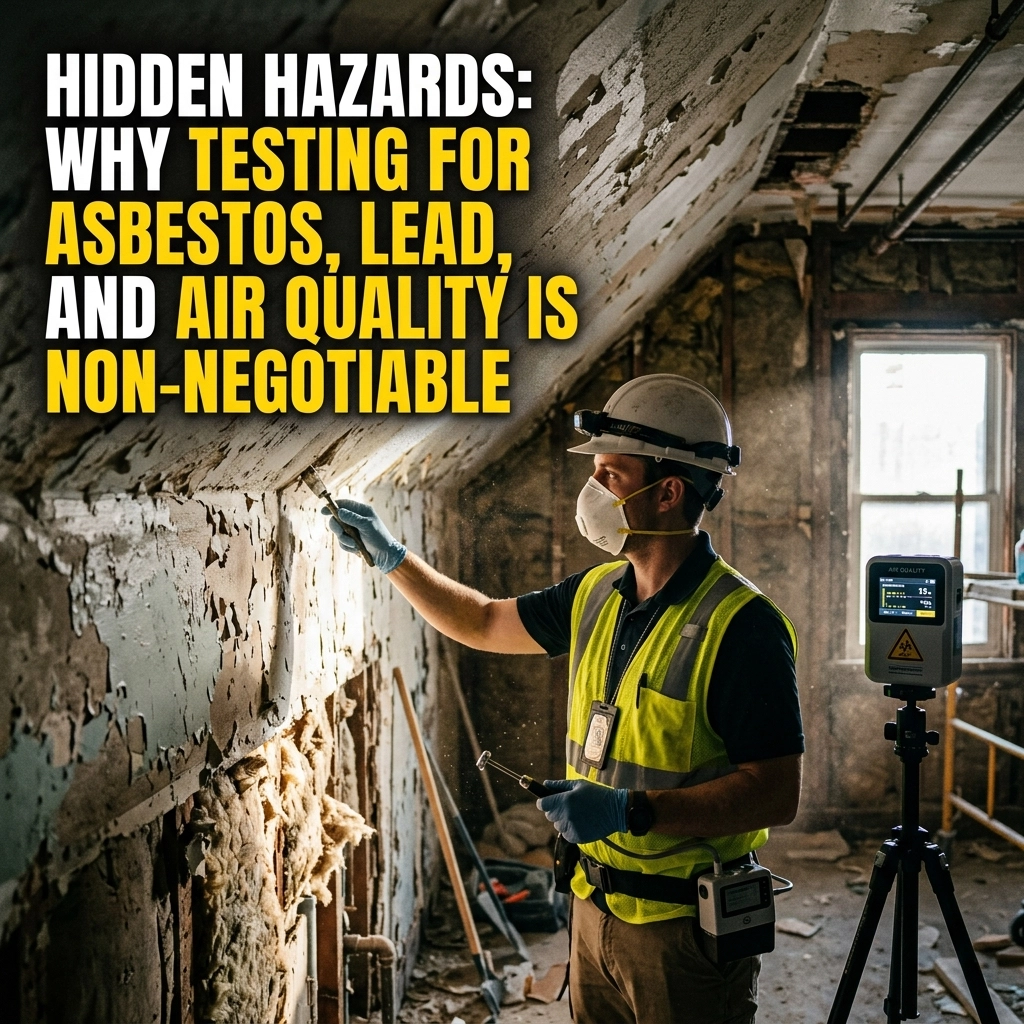
Hidden Hazards: Why Testing for Asbestos, Lead, and Air Quality is Non-Negotiable

The history of the built environment is a narrative of human innovation shadowed by unforeseen biological and chemical consequences. From the earliest civilizations to the rapid industrialization of the 20th century, the materials chosen for their durability, fire resistance, and aesthetic appeal have often revealed themselves as significant public health hazards. In the modern era, the presence of asbestos, lead, soil contaminants, and compromised indoor air quality represents a legacy of risk that property owners and businesses must navigate with scientific precision.

The identification and mitigation of these "hidden hazards" are no longer considered optional measures but are recognized as non-negotiable requirements for safety, compliance, and liability management. Environmental consulting services serve as the bridge between historical oversight and contemporary safety standards, employing rigorous testing protocols to eliminate the "unknown factor" that plagues aging infrastructure and new development sites alike.

The Antiquity of Environmental Hazards

Human interaction with hazardous minerals predates written history. Archaeological evidence suggests that as early as 4,500 BC, inhabitants of the Lake Juojärvi region in Finland utilized asbestos to strengthen clay pots and utensils. The "desirable properties" of the mineral: namely its resistance to heat and chemicals: made it a staple in various ancient cultures. The Ancient Greeks referred to it as asbestos, meaning "unquenchable," utilizing the fibers for lamp wicks and funeral shrouds.

However, the "documented effects" of these materials were also noted early in history. The Roman historian Pliny the Elder observed a "sickness of the lungs" among slaves who worked in asbestos mines, though the true mechanism of this disease would not be scientifically understood for nearly two millennia. Similarly, lead, known to the Romans as plumbum, was widely used in water pipes, cosmetics, and wine preservation. The subsequent decline in health among the Roman elite has been attributed by some historians to chronic lead poisoning, highlighting the ancient origins of environmental health crises.

Asbestos: The Rise and Regulation of the Indestructible Mineral

The Industrial Revolution of the 19th century catalyzed the mass production and application of asbestos. Its insulation properties were essential for the steam engines and boilers that powered the era. By the mid-20th century, asbestos was ubiquitous in construction materials, found in floor tiles, roofing shingles, insulation, and textured coatings.

The clinical realization of the hazards posed by asbestos peaked in the 1970s, as the link between airborne fibers and diseases such as mesothelioma, asbestosis, and lung cancer became undeniable. This led to a wave of regulations requiring specialized asbestos testing companies to identify the material before any renovation or demolition activities.

Fraying asbestos insulation on rusted industrial pipes showing the risk of airborne fibers.

Modern pre-demolition assessments are now a critical step in industrial and commercial projects. When materials are disturbed, microscopic fibers become airborne and can remain suspended for long periods, presenting a severe inhalation risk. Because these fibers are invisible to the naked eye, the reliance on professional laboratory analysis is the only method to ensure a site is safe for occupancy or construction.

Lead: The Versatile Poison in the Built Environment

Lead-based pigments were favored for decades due to their vibrancy and durability. In the United States, lead-based paint was common in residential and commercial structures until its federal ban for consumer use in 1978. Despite this ban, millions of structures still contain layers of lead paint hidden beneath modern coatings.

The degradation of these materials creates lead-contaminated dust and soil, which poses a significant neurological risk, particularly to children. Exposure can lead to developmental delays, cognitive impairment, and various systemic health issues. Consequently, a lead-based paint inspection is a foundational requirement for facility management and property acquisition.

Technical properties of lead that necessitate professional testing include:

  • Persistent Nature: Lead does not biodegrade or disappear over time; it accumulates in the environment.
  • Friction Surfaces: High-traffic areas such as window sashes and door frames generate lead dust through standard operation.
  • Bioaccumulation: Once ingested or inhaled, lead is stored in the bones and blood, making long-term exposure particularly dangerous.

Soil Contamination: The Invisible Legacy of Industry

While hazards within building walls are often discussed, the ground upon which structures sit can hold an equally complex chemical history. Soil contamination, or "dirt samples," often reveal the "unknown factor" of a property's past. Previous industrial uses, leaking underground storage tanks, and the use of persistent pesticides can leave a site saturated with heavy metals, hydrocarbons, and volatile organic compounds (VOCs).

Cross-section of building foundation showing hidden soil contamination and buried hazardous waste drums.

In the context of modern development, such as the San Leandro Unified School District soil investigations, testing is paramount to ensuring that children and staff are not exposed to subsurface toxins. Environmental consulting services utilize core sampling and laboratory analysis to map the extent of contamination, allowing for targeted remediation rather than costly, large-scale soil removal.

Indoor Air Quality: The Modern Frontier

In the late 20th century, the "Sick Building Syndrome" (SBS) phenomenon brought indoor air quality testing to the forefront of environmental science. As buildings became more energy-efficient and airtight, the lack of proper ventilation allowed for the accumulation of various pollutants, including:

  1. Volatile Organic Compounds (VOCs): Emitted from carpets, furniture, and cleaning agents.
  2. Biological Contaminants: Mold spores and bacteria thriving in HVAC systems.
  3. Particulate Matter: Dust and fibers from degrading building materials.
  4. Chemical Off-gassing: From specialized facilities requiring chemical inventories.

Poor indoor air quality can lead to immediate symptoms such as headaches and respiratory irritation, as well as chronic health conditions. For institutional environments like the Oakland Unified School District, maintaining high air quality standards is essential for public safety and operational continuity.

The Necessity of Professional Verification

The complexities of environmental hazards mean that visual inspections are insufficient. Professional testing is non-negotiable because the risks are often microscopic and chemically complex. Vista Environmental Consulting, established in 2007, has spent nearly two decades addressing the "unknown factor" for a diverse range of clients, from government agencies to private developers.

Professional laboratory microscope slide analysis used for identifying hidden environmental hazards.

The role of a consultant involves more than just identifying a hazard; it involves providing a data-driven path to safety. This includes:

  • Regulatory Compliance: Navigating the labyrinth of local, state, and federal laws regarding hazardous materials.
  • Risk Mitigation: Identifying potential liabilities before they manifest as health crises or legal battles.
  • Strategic Planning: Integrating environmental testing into the earliest stages of project development to avoid costly delays.

Solving the "Unknown Factor"

The presence of asbestos, lead, and soil contaminants often represents an "unknown factor" that can derail budgets and timelines. By employing environmental consulting services, stakeholders can gain a clinical understanding of their site's condition. Whether it is a hazardous materials survey for a military installation or a seismic retrofit project for a medical center, the objective remains the same: the transformation of uncertainty into actionable data.

Since 2007, Vista Environmental Consulting has provided the technical expertise required to identify these hidden hazards across various sectors. The transition from the "indestructible" materials of the past to the sustainable and safe environments of the future requires a commitment to rigorous, professional testing. In an era where health and safety are under constant scrutiny, the decision to test is not merely a choice( it is a fundamental responsibility.)

Posted in

Hidden Hazards: Why Testing for Asbestos, Lead, and Air Quality is Non-Negotiable

The history of the built environment is a narrative of human innovation shadowed by unforeseen biological and chemical consequences. From the earliest civilizations to the rapid industrialization of the 20th century, the materials chosen for their durability, fire resistance, and aesthetic appeal have often revealed themselves as significant public health hazards. In the modern era, the presence of asbestos, lead, soil contaminants, and compromised indoor air quality represents a legacy of risk that property owners and businesses must navigate with scientific precision.

The identification and mitigation of these "hidden hazards" are no longer considered optional measures but are recognized as non-negotiable requirements for safety, compliance, and liability management. Environmental consulting services serve as the bridge between historical oversight and contemporary safety standards, employing rigorous testing protocols to eliminate the "unknown factor" that plagues aging infrastructure and new development sites alike.

The Antiquity of Environmental Hazards

Human interaction with hazardous minerals predates written history. Archaeological evidence suggests that as early as 4,500 BC, inhabitants of the Lake Juojärvi region in Finland utilized asbestos to strengthen clay pots and utensils. The "desirable properties" of the mineral: namely its resistance to heat and chemicals: made it a staple in various ancient cultures. The Ancient Greeks referred to it as asbestos, meaning "unquenchable," utilizing the fibers for lamp wicks and funeral shrouds.

However, the "documented effects" of these materials were also noted early in history. The Roman historian Pliny the Elder observed a "sickness of the lungs" among slaves who worked in asbestos mines, though the true mechanism of this disease would not be scientifically understood for nearly two millennia. Similarly, lead, known to the Romans as plumbum, was widely used in water pipes, cosmetics, and wine preservation. The subsequent decline in health among the Roman elite has been attributed by some historians to chronic lead poisoning, highlighting the ancient origins of environmental health crises.

Asbestos: The Rise and Regulation of the Indestructible Mineral

The Industrial Revolution of the 19th century catalyzed the mass production and application of asbestos. Its insulation properties were essential for the steam engines and boilers that powered the era. By the mid-20th century, asbestos was ubiquitous in construction materials, found in floor tiles, roofing shingles, insulation, and textured coatings.

The clinical realization of the hazards posed by asbestos peaked in the 1970s, as the link between airborne fibers and diseases such as mesothelioma, asbestosis, and lung cancer became undeniable. This led to a wave of regulations requiring specialized asbestos testing companies to identify the material before any renovation or demolition activities.

Fraying asbestos insulation on rusted industrial pipes showing the risk of airborne fibers.

Modern pre-demolition assessments are now a critical step in industrial and commercial projects. When materials are disturbed, microscopic fibers become airborne and can remain suspended for long periods, presenting a severe inhalation risk. Because these fibers are invisible to the naked eye, the reliance on professional laboratory analysis is the only method to ensure a site is safe for occupancy or construction.

Lead: The Versatile Poison in the Built Environment

Lead-based pigments were favored for decades due to their vibrancy and durability. In the United States, lead-based paint was common in residential and commercial structures until its federal ban for consumer use in 1978. Despite this ban, millions of structures still contain layers of lead paint hidden beneath modern coatings.

The degradation of these materials creates lead-contaminated dust and soil, which poses a significant neurological risk, particularly to children. Exposure can lead to developmental delays, cognitive impairment, and various systemic health issues. Consequently, a lead-based paint inspection is a foundational requirement for facility management and property acquisition.

Technical properties of lead that necessitate professional testing include:

  • Persistent Nature: Lead does not biodegrade or disappear over time; it accumulates in the environment.
  • Friction Surfaces: High-traffic areas such as window sashes and door frames generate lead dust through standard operation.
  • Bioaccumulation: Once ingested or inhaled, lead is stored in the bones and blood, making long-term exposure particularly dangerous.

Soil Contamination: The Invisible Legacy of Industry

While hazards within building walls are often discussed, the ground upon which structures sit can hold an equally complex chemical history. Soil contamination, or "dirt samples," often reveal the "unknown factor" of a property's past. Previous industrial uses, leaking underground storage tanks, and the use of persistent pesticides can leave a site saturated with heavy metals, hydrocarbons, and volatile organic compounds (VOCs).

Cross-section of building foundation showing hidden soil contamination and buried hazardous waste drums.

In the context of modern development, such as the San Leandro Unified School District soil investigations, testing is paramount to ensuring that children and staff are not exposed to subsurface toxins. Environmental consulting services utilize core sampling and laboratory analysis to map the extent of contamination, allowing for targeted remediation rather than costly, large-scale soil removal.

Indoor Air Quality: The Modern Frontier

In the late 20th century, the "Sick Building Syndrome" (SBS) phenomenon brought indoor air quality testing to the forefront of environmental science. As buildings became more energy-efficient and airtight, the lack of proper ventilation allowed for the accumulation of various pollutants, including:

  1. Volatile Organic Compounds (VOCs): Emitted from carpets, furniture, and cleaning agents.
  2. Biological Contaminants: Mold spores and bacteria thriving in HVAC systems.
  3. Particulate Matter: Dust and fibers from degrading building materials.
  4. Chemical Off-gassing: From specialized facilities requiring chemical inventories.

Poor indoor air quality can lead to immediate symptoms such as headaches and respiratory irritation, as well as chronic health conditions. For institutional environments like the Oakland Unified School District, maintaining high air quality standards is essential for public safety and operational continuity.

The Necessity of Professional Verification

The complexities of environmental hazards mean that visual inspections are insufficient. Professional testing is non-negotiable because the risks are often microscopic and chemically complex. Vista Environmental Consulting, established in 2007, has spent nearly two decades addressing the "unknown factor" for a diverse range of clients, from government agencies to private developers.

Professional laboratory microscope slide analysis used for identifying hidden environmental hazards.

The role of a consultant involves more than just identifying a hazard; it involves providing a data-driven path to safety. This includes:

  • Regulatory Compliance: Navigating the labyrinth of local, state, and federal laws regarding hazardous materials.
  • Risk Mitigation: Identifying potential liabilities before they manifest as health crises or legal battles.
  • Strategic Planning: Integrating environmental testing into the earliest stages of project development to avoid costly delays.

Solving the "Unknown Factor"

The presence of asbestos, lead, and soil contaminants often represents an "unknown factor" that can derail budgets and timelines. By employing environmental consulting services, stakeholders can gain a clinical understanding of their site's condition. Whether it is a hazardous materials survey for a military installation or a seismic retrofit project for a medical center, the objective remains the same: the transformation of uncertainty into actionable data.

Since 2007, Vista Environmental Consulting has provided the technical expertise required to identify these hidden hazards across various sectors. The transition from the "indestructible" materials of the past to the sustainable and safe environments of the future requires a commitment to rigorous, professional testing. In an era where health and safety are under constant scrutiny, the decision to test is not merely a choice( it is a fundamental responsibility.)

Posted in

7 Mistakes You’re Making with Mold Inspection and Testing (and How to Fix Them)

The presence of fungal growth within human-occupied structures has been a subject of concern since the dawn of organized architecture. Historical records indicate that ancient civilizations recognized the detrimental effects of "leprosy in a house," a term used in antiquity to describe what is now scientifically identified as mold. In the modern era, the management of the built environment requires a sophisticated understanding of microbiology, building science, and industrial hygiene. Since its establishment in 2007, Vista Environmental Consulting has specialized in the identification and mitigation of these complex biological hazards.

Mold, a subset of the kingdom Fungi, plays a critical role in the natural ecosystem by decomposing organic matter. However, when these microorganisms colonize the interior of a structure, they present significant risks to structural integrity and occupant health. Despite the prevalence of mold in various climates, the process of mold inspection and testing is frequently undermined by technical errors and a lack of scientific rigor. The following analysis examines seven common deficiencies in environmental assessments and the professional methodologies required to rectify them.

1. Excessive Reliance on Limited Air Sampling

The most pervasive technical error in the assessment of indoor air quality is the over-reliance on short-term air sampling. Air testing captures a momentary snapshot of airborne fungal concentrations, which are subject to extreme fluctuations based on humidity, temperature, and physical disturbance. Fungal spores possess mass and are subject to the laws of gravity; many toxigenic species, such as Stachybotrys chartarum, produce "heavy" or "sticky" spores that do not readily aerosolize under normal conditions.

A singular air sample may return a "clean" result even in the presence of an active, hidden colony. To address this deficiency, environmental consulting services utilize a multi-faceted approach. This includes the integration of surface sampling, moisture mapping, and the utilization of moisture meters to identify the source of the biological growth rather than merely measuring its symptoms.

Environmental consultant using a digital moisture meter and air sampling pump for professional mold inspection.

2. Utilization of Unvalidated DIY Testing Kits

The retail market offers various "do-it-yourself" mold test kits, typically consisting of petri dishes designed to collect settling spores. These kits are scientifically inadequate for several reasons. Primarily, mold spores are ubiquitous in the atmosphere; any open petri dish will inevitably exhibit growth, leading to frequent false positives and unnecessary panic among building occupants. Furthermore, these kits do not account for species-specific pathogenicity or the total spore count.

The correction for this mistake involves engaging accredited environmental consulting services. Professional assessment ensures that samples are analyzed by laboratories accredited by the American Industrial Hygiene Association (AIHA). This level of oversight ensures that the data collected is both reproducible and legally defensible.

3. Neglecting Sub-Surface and Hidden Moisture Voids

Mold growth is an indicator of a moisture defect. A common error in inspection is the failure to investigate beyond the visible surface of building materials. Mold frequently thrives in concealed interstitial spaces, such as wall cavities, ceiling voids, and behind cabinetry. These areas often harbor extensive colonies that remain undetected during a cursory visual walk-through.

To rectify this, professionals employ advanced diagnostic tools. Thermal imaging cameras allow for the detection of temperature differentials associated with evaporative cooling, which indicates hidden moisture. Borescope inspections enable the visual verification of conditions inside wall assemblies without the need for large-scale destructive testing. Vista Environmental Consulting utilizes these technical protocols to ensure that the full extent of a biological infestation is documented.

4. Inadequate Species Identification and Risk Assessment

Not all fungal species present the same level of risk. A significant error in the field is the failure to distinguish between common "nuisance" molds and toxigenic varieties. Certain genera, including Aspergillus, Penicillium, and Fusarium, are known to produce secondary metabolites called mycotoxins. These chemical compounds can induce inflammatory responses or toxicosis in humans upon inhalation or dermal contact.

The professional remedy is a rigorous identification process. A detailed mold inspection and testing protocol must identify the specific genus and, when necessary, the species of the organism. This level of detail is critical for determining the required level of personal protective equipment (PPE) for workers and the necessary containment strategies for environmental remediation services.

Infrared thermal imaging revealing hidden moisture behind a wall during an environmental remediation assessment.

5. Improper Comparisons of Indoor and Outdoor Data

A foundational principle of industrial hygiene is the comparison of indoor concentrations to outdoor "baseline" levels. However, a common mistake is the belief that indoor levels must simply be lower than outdoor levels to be considered "safe." This is a fundamental misunderstanding of fungal ecology.

If the outdoor air is dominated by Cladosporium but the indoor environment shows an elevation of Aspergillus/Penicillium types: even if the total count is lower: it indicates an internal source of growth. The fix requires an expert interpretation of the data, focusing on species diversity and the presence of "indicator species" that are rarely found in the natural outdoor environment in high concentrations.

6. Absence of Post-Remediation Verification (PRV)

The conclusion of physical mold removal does not inherently signify that a structure is safe for re-occupancy. Many property owners omit the final step of Post-Remediation Verification (PRV), also known as clearance testing. Without PRV, there is no scientific confirmation that the remediation efforts were successful or that the hidden reservoirs of spores have been adequately captured by HEPA filtration.

Professional clearance involves a rigorous visual inspection of the containment area followed by aggressive air sampling. Only when the data confirms that the environment has returned to a "Condition 1" (normal fungal ecology) status can the remediation be considered complete. This systematic verification is a hallmark of the high-standard services provided by firms with established safety and performance records.

7. Engaging Unqualified or Under-Credentialed Firms

The environmental services industry is populated by various entities with varying degrees of competence. A critical mistake is hiring a firm based solely on cost rather than technical capability and safety credentials. Environmental hazards require a high degree of precision and accountability.

Vista Environmental Consulting exemplifies the credentials necessary for high-stakes environmental management. Established in 2007, the firm maintains an ISNetworld 'A' Rating and an Experience Modification Rate (EMR) of .83. With a member number of 400-222568, the organization demonstrates a sustained commitment to safety and technical excellence. These metrics are not merely administrative; they represent a documented history of reducing risk and providing reliable results in complex environmental scenarios.

Detailed microscopic view of Aspergillus fungal structures identified during a professional mold inspection.

Technical Summary of Professional Standards

To ensure the safety of the built environment, the following technical properties and protocols must be observed:

  • Initial Site Assessment: A comprehensive visual and olfactory evaluation of the structure.
  • Moisture Mapping: Using infrared thermography and moisture meters to locate the source of water intrusion.
  • Sampling Strategy: The integration of air, bulk, and surface samples to provide a complete biological profile.
  • Laboratory Analysis: Use of AIHA-LAP, LLC accredited facilities to ensure data integrity.
  • Remediation Design: Developing a scope of work based on established guidelines such as the IICRC S520.
  • Clearance Testing: Mandatory verification of the effectiveness of environmental remediation services.

The relationship between human innovation and the physical world is constantly challenged by the resilience of microorganisms. As buildings become more energy-efficient and airtight, the management of indoor air quality becomes increasingly complex. By avoiding these seven common mistakes and utilizing the expertise of established environmental consulting services, property owners can protect both their assets and the health of their occupants.

For those seeking a professional evaluation, Vista Environmental Consulting's leadership brings decades of experience to the table, ensuring that every project is handled with the clinical precision and authoritative expertise required in the modern regulatory landscape.

Environmental consultant inspecting industrial HVAC systems to ensure workplace safety and air quality standards.

The history of environmental science is one of continuous improvement and the refinement of standards. From the first observations of moisture-related decay to the sophisticated genomic testing of the 21st century, the goal remains the same: the creation of a safe and stable interior environment. Through rigorous mold inspection and testing, the industry continues to advance toward that objective, one structure at a time.

Posted in

Why Your Lead-Based Paint Inspection Might Fail: 5 Things to Know About the New 2026 EPA Dust Rules

The landscape of environmental compliance underwent a significant transformation as of January 2026. For property owners, facility managers, and developers, the standards for a successful lead based paint inspection have become more rigorous than at any point in the last half-century. The Environmental Protection Agency (EPA) has finalized and implemented stricter dust-lead hazard standards (DLHS) and dust-lead clearance levels (DLCL), effectively lowering the threshold for what constitutes a safe environment.

Since the initial ban on lead-based paint in residential applications in 1978, regulatory bodies have systematically reduced the permissible levels of lead in dust. This trajectory is driven by medical consensus that no level of lead exposure is considered safe for human neurological development. As these standards tighten, many properties that previously passed inspections are now finding themselves in a state of non-compliance. Understanding these changes is critical for maintaining the safety and legality of multi-family housing, schools, and commercial redevelopment projects.

Professional lead based paint inspection using an XRF analyzer on a weathered window sill.

1. The Significant Reduction in Dust-Lead Action Levels

The most direct reason a contemporary lead based paint inspection may result in failure is the dramatic reduction in the "action levels" for lead dust. As of the 2026 compliance deadline, the EPA has established post-abatement clearance levels that are significantly lower than those used in previous decades.

The specific thresholds now required for clearance are:

  • Floors: 5 micrograms per square foot (µg/ft²), reduced from the previous standard of 10 µg/ft².
  • Interior Window Sills: 40 µg/ft², reduced from the previous standard of 100 µg/ft².
  • Window Troughs: 100 µg/ft², a substantial drop from the historical 400 µg/ft² standard.

These changes mean that the "cleaning to clearance" process requires a much higher degree of precision. Surfaces that appear visually clean can still harbor microscopic dust particles that exceed the 5 µg/ft² limit on floors. In the context of redevelopment or urban renewal, this requires more specialized cleaning protocols and rigorous verification from environmental consulting services.

2. The New "Reportable Level" Hazard Definition

Perhaps the most significant shift in the 2026 rules is the redefinition of what constitutes a "hazard." Previously, a hazard was identified only when dust-lead levels exceeded a specific numeric threshold. Under the current regulations, the EPA has moved toward a more sensitive model.

The EPA now defines a lead dust hazard as any reportable level of lead dust measured by an EPA-recognized laboratory. This means that if a laboratory’s equipment is sensitive enough to detect lead dust at levels even lower than the action levels, that detection may be classified as a hazard in a pre-abatement environment. This "any detectable level" philosophy removes the safety margin that property owners previously relied upon. If the lab can find it, the inspection may technically fail to classify the area as "lead-free" or "lead-safe," necessitating further action or disclosure.

Advanced laboratory environmental consulting services analyzing dust wipes for lead hazards.

3. Decoupling of Standards: Hazard Identification vs. Clearance

Historically, the level used to identify a hazard was the same level used to clear a project after abatement. The 2026 rules have "decoupled" these standards. This creates a two-tiered system that can be confusing for those not utilizing professional environmental consultants in San Diego or other highly regulated regions.

The distinction is as follows:

  • Dust-Lead Reportable Level: This is used for identifying hazards in existing conditions. Because this is now tied to the lowest level a laboratory can reliably detect, the barrier for identifying a hazard is lower than ever.
  • Dust-Lead Action Level: This is the standard used to determine if an abatement or renovation project was successful.

This decoupling means a property could potentially fail an initial screening (hazard identification) because lead was detected at 3 µg/ft² on a floor, even though that same level would be considered "clean" if it were measured during a post-abatement clearance test (where the limit is 5 µg/ft²). This regulatory nuance requires sophisticated documentation and expert interpretation to navigate without unnecessary project delays.

4. Stricter Requirements for Pre-1978 and Child-Occupied Facilities

The 2026 rules place an increased emphasis on K-12 education facilities and healthcare environments. For any structure built before 1978 that houses children under the age of six, the tolerance for lead dust is essentially zero.

The EPA's updated research indicates that even low-level exposure contributes to cognitive impairment and behavioral issues. Consequently, the inspection process for these facilities now includes more frequent sampling and a lower threshold for initiating abatement. For managers of higher education student housing or civic buildings, these rules apply whenever the space is utilized by the protected age group. Failure to meet these standards doesn't just result in a failed inspection; it can lead to significant legal liabilities and federal enforcement actions.

Clean kindergarten classroom following 2026 EPA lead dust safety standards for school facilities.

5. Laboratory Sensitivity and Sampling Precision

Under the new standards, the choice of laboratory and the method of sampling have become critical variables. Because the "reportable level" is now the benchmark for hazard identification, the sensitivity of the laboratory's analytical methods directly impacts whether a property passes or fails.

Standard wipe sampling techniques must be executed with extreme precision to avoid cross-contamination. Even a minor oversight in the sampling field: such as using a wipe that has not been properly validated for the new lower thresholds: can result in an artificially high reading that triggers a failure. Environmental consulting services must now ensure that their chain of custody and laboratory partners are capable of detecting lead at the 2026 parts-per-billion requirements.

Professional Compliance and Risk Mitigation

Navigating the complexities of the 2026 EPA dust rules requires a partner with deep technical expertise and a proven safety record. Vista Environmental Consulting has been providing comprehensive environmental consulting services since 2007, assisting clients through several iterations of lead and asbestos regulatory changes.

In an era where the margin for error has been reduced to nearly zero, the credentials of your consultant are a primary defense against project failure and liability. Vista Environmental Consulting maintains the highest industry standards, evidenced by:

  • ISNetworld 'A' Rating: Ensuring the highest level of safety and quality management.
  • Experience Modification Rate (EMR) of .83: Reflecting a superior safety record compared to the industry average.
  • Member Number 400-222568: Verifiable standing within professional compliance networks.

Expert environmental consultants in San Diego overseeing lead safety at an urban redevelopment site.

For those managing assets in Southern California, including San Diego County and Orange County, or in the Northern California region around the San Francisco Bay Area, the localized enforcement of these federal rules can vary. Engaging with experienced environmental consultants in San Diego ensures that local regional requirements are met alongside the federal 2026 standards.

Conclusion

The 2026 EPA dust rules represent a permanent shift in how lead-based paint hazards are managed in the United States. The reduction of action levels to 5/40/100 µg/ft², combined with the "any detectable level" hazard definition, means that property owners must be more proactive than ever. A failed inspection is no longer just a hurdle; it is a signal that the legacy of lead-based paint requires modern, precision-based solutions.

By understanding the decoupling of standards and the increased sensitivity of modern laboratory testing, stakeholders can better prepare their properties for the rigorous federal oversight currently in place. Ensuring compliance is not merely a matter of passing a test: it is about the clinical necessity of eliminating lead exposure in the built environment. For those seeking to verify their compliance or schedule an updated lead based paint inspection, professional contact with a qualified consultant is the first step in mitigating risk and ensuring the safety of all building occupants.

Posted in

Why Your Lead-Based Paint Inspection Might Fail: 5 Things to Know About the New 2026 EPA Dust Rules

The landscape of environmental compliance underwent a significant transformation as of January 2026. For property owners, facility managers, and developers, the standards for a successful lead based paint inspection have become more rigorous than at any point in the last half-century. The Environmental Protection Agency (EPA) has finalized and implemented stricter dust-lead hazard standards (DLHS) and dust-lead clearance levels (DLCL), effectively lowering the threshold for what constitutes a safe environment.

Since the initial ban on lead-based paint in residential applications in 1978, regulatory bodies have systematically reduced the permissible levels of lead in dust. This trajectory is driven by medical consensus that no level of lead exposure is considered safe for human neurological development. As these standards tighten, many properties that previously passed inspections are now finding themselves in a state of non-compliance. Understanding these changes is critical for maintaining the safety and legality of multi-family housing, schools, and commercial redevelopment projects.

Professional lead based paint inspection using an XRF analyzer on a weathered window sill.

1. The Significant Reduction in Dust-Lead Action Levels

The most direct reason a contemporary lead based paint inspection may result in failure is the dramatic reduction in the "action levels" for lead dust. As of the 2026 compliance deadline, the EPA has established post-abatement clearance levels that are significantly lower than those used in previous decades.

The specific thresholds now required for clearance are:

  • Floors: 5 micrograms per square foot (µg/ft²), reduced from the previous standard of 10 µg/ft².
  • Interior Window Sills: 40 µg/ft², reduced from the previous standard of 100 µg/ft².
  • Window Troughs: 100 µg/ft², a substantial drop from the historical 400 µg/ft² standard.

These changes mean that the "cleaning to clearance" process requires a much higher degree of precision. Surfaces that appear visually clean can still harbor microscopic dust particles that exceed the 5 µg/ft² limit on floors. In the context of redevelopment or urban renewal, this requires more specialized cleaning protocols and rigorous verification from environmental consulting services.

2. The New "Reportable Level" Hazard Definition

Perhaps the most significant shift in the 2026 rules is the redefinition of what constitutes a "hazard." Previously, a hazard was identified only when dust-lead levels exceeded a specific numeric threshold. Under the current regulations, the EPA has moved toward a more sensitive model.

The EPA now defines a lead dust hazard as any reportable level of lead dust measured by an EPA-recognized laboratory. This means that if a laboratory’s equipment is sensitive enough to detect lead dust at levels even lower than the action levels, that detection may be classified as a hazard in a pre-abatement environment. This "any detectable level" philosophy removes the safety margin that property owners previously relied upon. If the lab can find it, the inspection may technically fail to classify the area as "lead-free" or "lead-safe," necessitating further action or disclosure.

Advanced laboratory environmental consulting services analyzing dust wipes for lead hazards.

3. Decoupling of Standards: Hazard Identification vs. Clearance

Historically, the level used to identify a hazard was the same level used to clear a project after abatement. The 2026 rules have "decoupled" these standards. This creates a two-tiered system that can be confusing for those not utilizing professional environmental consultants in San Diego or other highly regulated regions.

The distinction is as follows:

  • Dust-Lead Reportable Level: This is used for identifying hazards in existing conditions. Because this is now tied to the lowest level a laboratory can reliably detect, the barrier for identifying a hazard is lower than ever.
  • Dust-Lead Action Level: This is the standard used to determine if an abatement or renovation project was successful.

This decoupling means a property could potentially fail an initial screening (hazard identification) because lead was detected at 3 µg/ft² on a floor, even though that same level would be considered "clean" if it were measured during a post-abatement clearance test (where the limit is 5 µg/ft²). This regulatory nuance requires sophisticated documentation and expert interpretation to navigate without unnecessary project delays.

4. Stricter Requirements for Pre-1978 and Child-Occupied Facilities

The 2026 rules place an increased emphasis on K-12 education facilities and healthcare environments. For any structure built before 1978 that houses children under the age of six, the tolerance for lead dust is essentially zero.

The EPA's updated research indicates that even low-level exposure contributes to cognitive impairment and behavioral issues. Consequently, the inspection process for these facilities now includes more frequent sampling and a lower threshold for initiating abatement. For managers of higher education student housing or civic buildings, these rules apply whenever the space is utilized by the protected age group. Failure to meet these standards doesn't just result in a failed inspection; it can lead to significant legal liabilities and federal enforcement actions.

Clean kindergarten classroom following 2026 EPA lead dust safety standards for school facilities.

5. Laboratory Sensitivity and Sampling Precision

Under the new standards, the choice of laboratory and the method of sampling have become critical variables. Because the "reportable level" is now the benchmark for hazard identification, the sensitivity of the laboratory's analytical methods directly impacts whether a property passes or fails.

Standard wipe sampling techniques must be executed with extreme precision to avoid cross-contamination. Even a minor oversight in the sampling field: such as using a wipe that has not been properly validated for the new lower thresholds: can result in an artificially high reading that triggers a failure. Environmental consulting services must now ensure that their chain of custody and laboratory partners are capable of detecting lead at the 2026 parts-per-billion requirements.

Professional Compliance and Risk Mitigation

Navigating the complexities of the 2026 EPA dust rules requires a partner with deep technical expertise and a proven safety record. Vista Environmental Consulting has been providing comprehensive environmental consulting services since 2007, assisting clients through several iterations of lead and asbestos regulatory changes.

In an era where the margin for error has been reduced to nearly zero, the credentials of your consultant are a primary defense against project failure and liability. Vista Environmental Consulting maintains the highest industry standards, evidenced by:

  • ISNetworld 'A' Rating: Ensuring the highest level of safety and quality management.
  • Experience Modification Rate (EMR) of .83: Reflecting a superior safety record compared to the industry average.
  • Member Number 400-222568: Verifiable standing within professional compliance networks.

Expert environmental consultants in San Diego overseeing lead safety at an urban redevelopment site.

For those managing assets in Southern California, including San Diego County and Orange County, or in the Northern California region around the San Francisco Bay Area, the localized enforcement of these federal rules can vary. Engaging with experienced environmental consultants in San Diego ensures that local regional requirements are met alongside the federal 2026 standards.

Conclusion

The 2026 EPA dust rules represent a permanent shift in how lead-based paint hazards are managed in the United States. The reduction of action levels to 5/40/100 µg/ft², combined with the "any detectable level" hazard definition, means that property owners must be more proactive than ever. A failed inspection is no longer just a hurdle; it is a signal that the legacy of lead-based paint requires modern, precision-based solutions.

By understanding the decoupling of standards and the increased sensitivity of modern laboratory testing, stakeholders can better prepare their properties for the rigorous federal oversight currently in place. Ensuring compliance is not merely a matter of passing a test: it is about the clinical necessity of eliminating lead exposure in the built environment. For those seeking to verify their compliance or schedule an updated lead based paint inspection, professional contact with a qualified consultant is the first step in mitigating risk and ensuring the safety of all building occupants.

Posted in

Why Your Lead-Based Paint Inspection Might Fail: 5 Things to Know About the New 2026 EPA Dust Rules

The landscape of environmental compliance underwent a significant transformation as of January 2026. For property owners, facility managers, and developers, the standards for a successful lead based paint inspection have become more rigorous than at any point in the last half-century. The Environmental Protection Agency (EPA) has finalized and implemented stricter dust-lead hazard standards (DLHS) and dust-lead clearance levels (DLCL), effectively lowering the threshold for what constitutes a safe environment.

Since the initial ban on lead-based paint in residential applications in 1978, regulatory bodies have systematically reduced the permissible levels of lead in dust. This trajectory is driven by medical consensus that no level of lead exposure is considered safe for human neurological development. As these standards tighten, many properties that previously passed inspections are now finding themselves in a state of non-compliance. Understanding these changes is critical for maintaining the safety and legality of multi-family housing, schools, and commercial redevelopment projects.

Professional lead based paint inspection using an XRF analyzer on a weathered window sill.

1. The Significant Reduction in Dust-Lead Action Levels

The most direct reason a contemporary lead based paint inspection may result in failure is the dramatic reduction in the "action levels" for lead dust. As of the 2026 compliance deadline, the EPA has established post-abatement clearance levels that are significantly lower than those used in previous decades.

The specific thresholds now required for clearance are:

  • Floors: 5 micrograms per square foot (µg/ft²), reduced from the previous standard of 10 µg/ft².
  • Interior Window Sills: 40 µg/ft², reduced from the previous standard of 100 µg/ft².
  • Window Troughs: 100 µg/ft², a substantial drop from the historical 400 µg/ft² standard.

These changes mean that the "cleaning to clearance" process requires a much higher degree of precision. Surfaces that appear visually clean can still harbor microscopic dust particles that exceed the 5 µg/ft² limit on floors. In the context of redevelopment or urban renewal, this requires more specialized cleaning protocols and rigorous verification from environmental consulting services.

2. The New "Reportable Level" Hazard Definition

Perhaps the most significant shift in the 2026 rules is the redefinition of what constitutes a "hazard." Previously, a hazard was identified only when dust-lead levels exceeded a specific numeric threshold. Under the current regulations, the EPA has moved toward a more sensitive model.

The EPA now defines a lead dust hazard as any reportable level of lead dust measured by an EPA-recognized laboratory. This means that if a laboratory’s equipment is sensitive enough to detect lead dust at levels even lower than the action levels, that detection may be classified as a hazard in a pre-abatement environment. This "any detectable level" philosophy removes the safety margin that property owners previously relied upon. If the lab can find it, the inspection may technically fail to classify the area as "lead-free" or "lead-safe," necessitating further action or disclosure.

Advanced laboratory environmental consulting services analyzing dust wipes for lead hazards.

3. Decoupling of Standards: Hazard Identification vs. Clearance

Historically, the level used to identify a hazard was the same level used to clear a project after abatement. The 2026 rules have "decoupled" these standards. This creates a two-tiered system that can be confusing for those not utilizing professional environmental consultants in San Diego or other highly regulated regions.

The distinction is as follows:

  • Dust-Lead Reportable Level: This is used for identifying hazards in existing conditions. Because this is now tied to the lowest level a laboratory can reliably detect, the barrier for identifying a hazard is lower than ever.
  • Dust-Lead Action Level: This is the standard used to determine if an abatement or renovation project was successful.

This decoupling means a property could potentially fail an initial screening (hazard identification) because lead was detected at 3 µg/ft² on a floor, even though that same level would be considered "clean" if it were measured during a post-abatement clearance test (where the limit is 5 µg/ft²). This regulatory nuance requires sophisticated documentation and expert interpretation to navigate without unnecessary project delays.

4. Stricter Requirements for Pre-1978 and Child-Occupied Facilities

The 2026 rules place an increased emphasis on K-12 education facilities and healthcare environments. For any structure built before 1978 that houses children under the age of six, the tolerance for lead dust is essentially zero.

The EPA's updated research indicates that even low-level exposure contributes to cognitive impairment and behavioral issues. Consequently, the inspection process for these facilities now includes more frequent sampling and a lower threshold for initiating abatement. For managers of higher education student housing or civic buildings, these rules apply whenever the space is utilized by the protected age group. Failure to meet these standards doesn't just result in a failed inspection; it can lead to significant legal liabilities and federal enforcement actions.

Clean kindergarten classroom following 2026 EPA lead dust safety standards for school facilities.

5. Laboratory Sensitivity and Sampling Precision

Under the new standards, the choice of laboratory and the method of sampling have become critical variables. Because the "reportable level" is now the benchmark for hazard identification, the sensitivity of the laboratory's analytical methods directly impacts whether a property passes or fails.

Standard wipe sampling techniques must be executed with extreme precision to avoid cross-contamination. Even a minor oversight in the sampling field: such as using a wipe that has not been properly validated for the new lower thresholds: can result in an artificially high reading that triggers a failure. Environmental consulting services must now ensure that their chain of custody and laboratory partners are capable of detecting lead at the 2026 parts-per-billion requirements.

Professional Compliance and Risk Mitigation

Navigating the complexities of the 2026 EPA dust rules requires a partner with deep technical expertise and a proven safety record. Vista Environmental Consulting has been providing comprehensive environmental consulting services since 2007, assisting clients through several iterations of lead and asbestos regulatory changes.

In an era where the margin for error has been reduced to nearly zero, the credentials of your consultant are a primary defense against project failure and liability. Vista Environmental Consulting maintains the highest industry standards, evidenced by:

  • ISNetworld 'A' Rating: Ensuring the highest level of safety and quality management.
  • Experience Modification Rate (EMR) of .83: Reflecting a superior safety record compared to the industry average.
  • Member Number 400-222568: Verifiable standing within professional compliance networks.

Expert environmental consultants in San Diego overseeing lead safety at an urban redevelopment site.

For those managing assets in Southern California, including San Diego County and Orange County, or in the Northern California region around the San Francisco Bay Area, the localized enforcement of these federal rules can vary. Engaging with experienced environmental consultants in San Diego ensures that local regional requirements are met alongside the federal 2026 standards.

Conclusion

The 2026 EPA dust rules represent a permanent shift in how lead-based paint hazards are managed in the United States. The reduction of action levels to 5/40/100 µg/ft², combined with the "any detectable level" hazard definition, means that property owners must be more proactive than ever. A failed inspection is no longer just a hurdle; it is a signal that the legacy of lead-based paint requires modern, precision-based solutions.

By understanding the decoupling of standards and the increased sensitivity of modern laboratory testing, stakeholders can better prepare their properties for the rigorous federal oversight currently in place. Ensuring compliance is not merely a matter of passing a test: it is about the clinical necessity of eliminating lead exposure in the built environment. For those seeking to verify their compliance or schedule an updated lead based paint inspection, professional contact with a qualified consultant is the first step in mitigating risk and ensuring the safety of all building occupants.

Posted in

The “Magic Mineral” with a Dark Side: A Brief History of Asbestos

Asbestos is a group of naturally occurring silicate minerals that once held a position of high esteem in the global industrial landscape. Known for centuries as the "magic mineral," its physical properties: including high tensile strength, chemical resistance, and an extraordinary ability to withstand heat and fire: made it a foundational component of modern infrastructure. However, the narrative of asbestos is a complex one, transitioning from a celebrated miracle of the earth to a strictly regulated health hazard. Understanding the trajectory of this material requires a chronological examination of its use, from prehistoric pottery to the industrial boom of the 20th century.

Etymology and Mineralogical Properties

The term "asbestos" is derived from the Ancient Greek word asbestos, which translates to "inextinguishable" or "indestructible." This nomenclature accurately reflected the observation that the fibers would not burn, even when subjected to intense flame. Mineralogically, asbestos is categorized into two primary groups: serpentine (chrysotile) and amphibole (amosite, crocidolite, anthophyllite, tremolite, and actinolite).

These minerals are defined by several key physical characteristics that drove their historical demand:

  • Heat Resistance: High melting points made asbestos ideal for fireproofing.
  • Tensile Strength: The fibers could be spun and woven like cotton or wool.
  • Chemical Inertia: Resistance to corrosion from acids and alkalis.
  • Electrical Insulation: High dielectric strength made it valuable for electrical components.

Ancient Origins and Early Textual References

The human utilization of asbestos dates back much further than the Industrial Revolution. Archaeological evidence suggests that as early as 4,500 years ago, inhabitants of the Lake Juojärvi region in East Finland incorporated asbestos fibers into clay pottery. This prehistoric "fiber-reinforcement" increased the durability and thermal resistance of cooking utensils and storage vessels.

Ancient clay pottery reinforced with natural asbestos fibers being tested over fire.

In the Mediterranean, the ancient Greeks and Romans documented various applications for the mineral. The Greek geographer Strabo and the Roman naturalist Pliny the Elder both remarked on the "linum vivum," or "living linen." This fireproof cloth was used to create wicks for the perpetual lamps of the Vestal Virgins, ensuring they would never burn out. Furthermore, wealthy Romans were known to use asbestos napkins at banquets. Rather than washing these linens, they were cleansed by being thrown into a fire, which incinerated the food particles and stains while leaving the asbestos fabric pristine.

The ancient Egyptians also recognized the preservative qualities of the mineral, allegedly using asbestos-woven garments to wrap the bodies of deceased royalty to protect the remains from external elements and preserve the integrity of the funeral shrouds during cremation.

The Middle Ages and the Legend of the Salamander

During the Middle Ages, the rarity and seemingly magical properties of asbestos led to widespread myths. One of the most persistent legends involved the "salamander," a mythical creature believed to live in fire. It was frequently claimed that asbestos fibers were actually the wool or skin of these creatures.

Marco Polo, the famous Venetian merchant, encountered asbestos during his travels through Tartary (modern-day Russia and China) in the 13th century. In his writings, Polo debunked the salamander myth, correctly identifying the substance as a mineral dug from the earth. He observed a factory where the ore was crushed, treated, and woven into fireproof cloth. Despite his efforts to provide a scientific explanation, the mystical aura surrounding the "magic mineral" persisted in Europe for several more centuries.

The Holy Roman Emperor Charlemagne reportedly utilized the material’s properties to impress guests and deter superstitious enemies. He allegedly owned an asbestos tablecloth that he would throw into a fire after dinner, only to retrieve it undamaged and clean, a feat that many at the time viewed as supernatural.

The Industrial Revolution: The Mining and Manufacturing Boom

While ancient use was significant, it was the Industrial Revolution that transformed asbestos from a luxury curiosity into a global commodity. The rapid expansion of steam-powered machinery in the 1800s created an urgent need for effective insulation. Steam engines, boilers, and high-temperature pipes required materials that could contain heat and prevent fires in confined industrial spaces.

Large-scale commercial mining commenced in the mid-19th century. The United States saw its first commercial operations in 1858, followed by the discovery of massive chrysotile deposits in Quebec, Canada, in 1874. By the early 1900s, mining operations expanded into South Africa, Russia, and Australia.

Industrial Revolution steam engine boiler insulated with thick white asbestos material.

The invention of the Hatschek machine in 1907 by Austrian engineer Ludwig Hatschek was a pivotal moment in the history of asbestos. This technology allowed for the mass production of asbestos-cement products, which were durable, fireproof, and inexpensive. This led to a surge in the use of asbestos in construction, including:

  • Roofing shingles and siding.
  • Insulation for residential and commercial buildings.
  • Fireproofing for steel beams in skyscrapers.
  • Gaskets and brake linings for the burgeoning automotive industry.

Infrastructure projects, such as the Port of Oakland pre-demolition assessments and hazardous materials investigations at Naval Base Ventura, frequently encounter these legacy materials today, illustrating how deeply asbestos was integrated into the maritime and military sectors during the 20th century.

The Mid-Century Peak and Ubiquity

By the middle of the 20th century, asbestos was found in more than 3,000 different commercial products. It was used in everything from floor tiles and popcorn ceilings to hair dryers and ironing board covers. During World War II, the demand for asbestos skyrocketed, as it was essential for the construction of warships, submarines, and aircraft. Sailors and shipyard workers were exposed to high concentrations of the mineral in the cramped, poorly ventilated quarters of military vessels.

Worker installing mid-century vinyl floor tiles and asbestos popcorn ceiling in a home.

Educational institutions and public facilities also heavily utilized the material. Many districts, including the Oakland Unified School District and the San Leandro Unified School District, have had to manage the long-term environmental implications of these historical building choices. From the Department of Motor Vehicles to California State University Monterey Bay, the presence of asbestos became a standard feature of the American built environment.

The Transition to Risk Awareness

The decline of asbestos began not because of a loss of utility, but because of the mounting evidence of its devastating biological effects. While early reports of "dust disease" among mine workers surfaced in the late 1890s and early 1900s, it took several decades for the full scope of the hazard to be recognized.

The clinical recognition of asbestosis, a chronic lung disease caused by the inhalation of fibers, was followed by the identification of the link between asbestos exposure and lung cancer in the 1940s. By the 1960s, medical researchers established a definitive connection between asbestos and mesothelioma, a rare and aggressive form of cancer affecting the lining of the lungs and abdomen.

In response to these findings, the late 20th century saw a wave of regulatory action. In the United States, the Environmental Protection Agency (EPA) and the Occupational Safety and Health Administration (OSHA) began implementing strict regulations on the use and handling of asbestos in the 1970s. This marked the shift from a focus on production to a focus on abatement, management, and environmental consulting services.

Modern Management and Compliance

Today, the legacy of asbestos remains a primary concern for property owners, developers, and public agencies. Because the material is often hidden within wall cavities, pipe insulation, or flooring adhesives, specialized expertise is required to identify and mitigate risks safely. This is where modern asbestos testing companies play a vital role.

When considering a renovation or demolition, the asbestos survey cost is a necessary investment in safety and legal compliance. These surveys identify the type and condition of asbestos-containing materials (ACM) to ensure they are handled according to state and federal law.

Vista Environmental Consulting has been a leader in this field since 2007. Providing comprehensive environmental consulting services, the firm assists clients in navigating the complexities of hazardous materials management. With a commitment to safety reflected in an ISNetworld 'A' Rating and an Experience Modification Rate (EMR) of .83 (Member Number: 400-222568), Vista ensures that historical infrastructure can be modernized without compromising public health.

Environmental consultant conducting asbestos testing and hazardous materials survey on pipes.

From seismic retrofitting at medical centers to hazardous materials surveys at Marine Corps bases, the lessons of the history of asbestos are applied daily through meticulous testing and strategic planning. The "magic mineral" may have a dark side, but with modern science and rigorous oversight, its risks are effectively managed for the safety of future generations.

Posted in

Clean Room Monitoring Matters: Why Your Facility’s Integrity Depends on It

The integrity of a controlled environment is defined by the absence of pollutants such as dust, airborne microbes, and aerosol particles. In the realm of high-precision manufacturing, biotechnology, and pharmaceuticals, the maintenance of these environments: known as clean rooms: is not merely a logistical preference but a fundamental requirement for product safety and regulatory compliance. Clean room monitoring is the systematic process of verifying that these environments adhere to specific cleanliness standards, ensuring that environmental variables do not compromise the work conducted within.

The Historical Evolution of Environmental Control

The conceptual origins of clean room technology can be traced to the mid-19th century, specifically within the medical field. In the 1860s, British surgeon Joseph Lister began implementing antiseptic protocols to reduce post-surgical infections, recognizing that microorganisms in the air and on surfaces contributed to patient mortality. This period marked the initial transition toward controlled hygienic environments.

As industrialization progressed in the 20th century, the necessity for particulate control moved beyond the operating room. During World War II, the production of high-precision instruments, such as aircraft bearings and sights, required environments free from dust that could cause mechanical failure. The development of the High-Efficiency Particulate Air (HEPA) filter in the 1940s: a product of the Manhattan Project: revolutionized environmental control by allowing for the removal of 99.97% of particles as small as 0.3 microns.

By the 1960s, Willis Whitfield, an American physicist, designed the modern "laminar flow" clean room, which utilized a constant, unidirectional flow of filtered air to sweep contaminants out of the room. This innovation laid the groundwork for the modern standards currently utilized by environmental consulting services to protect facility integrity.

Historical evolution of clean room facilities and modern environmental consulting services for integrity.

The Mechanics of Contamination and Facility Integrity

Facility integrity in a controlled environment refers to the facility's ability to maintain a defined set of environmental conditions despite external fluctuations or internal activities. Contamination events are often the result of "process drift," where minute changes in mechanical performance or personnel behavior lead to a breach in sterility.

The primary vectors of contamination include:

  • Personnel: Human occupants are the largest source of particulates, shedding skin cells, hair, and fibers from clothing.
  • Equipment: Mechanical wear and tear can release metallic or plastic particulates into the air.
  • External Air: Ingress of unfiltered air through structural gaps or failed filtration systems can introduce mold, pollen, and industrial pollutants.
  • Cross-Contamination: The movement of materials between different cleanliness zones can transport hazardous or reactive agents.

Without continuous clean room monitoring, these contamination events may go undetected for days or weeks. In the pharmaceutical sector, such a failure can result in the loss of millions of dollars in product or, more critically, the distribution of compromised medication to patients.

Technical Parameters of Effective Monitoring

A comprehensive monitoring strategy evaluates multiple physical and environmental variables simultaneously. Each parameter provides a distinct data point that contributes to the overall profile of facility health.

1. Differential Pressure

Differential pressure is the practice of maintaining higher air pressure in a clean room relative to the surrounding hallways or lower-grade rooms. This "positive pressure" ensures that when a door is opened, air flows out of the clean room, preventing unfiltered air from entering. Monitoring systems track these pressure gradients to ensure that the physical barrier of the air is never compromised.

2. Particulate Levels

The core of clean room classification is based on the concentration of particles per cubic meter of air. Monitoring systems utilize laser particle counters to track levels in real-time. This is essential for compliance with ISO 14644 standards, which categorize clean rooms from Class 1 (cleanest) to Class 9.

3. Temperature and Relative Humidity

Temperature stability is critical for preventing microbial growth and ensuring the stability of chemical reactions. Relative humidity must be tightly controlled to prevent electrostatic discharge (which can destroy semiconductors) and to limit the growth of mold and other biological contaminants. Projects such as the indoor air quality assessment at California Maritime Academy highlight the importance of these atmospheric controls in specialized environments.

Digital clean room monitoring sensor displaying real-time atmospheric controls and particulate data.

Regulatory Standards and Global Compliance

Modern clean room operations are governed by a complex framework of international and regional standards. Compliance with these regulations is mandatory for legal operation and consumer safety.

  • ISO 14644: This is the primary international standard for clean rooms, specifying the classification of air cleanliness and the requirements for testing and monitoring.
  • USP <797> and <800>: In the United States, the Pharmacopeia (USP) sets standards for the compounding of sterile preparations. USP <797> focuses on preventing contamination in sterile compounding, while USP <800> addresses the safe handling of hazardous drugs to protect personnel.
  • 21 CFR Part 11: For facilities regulated by the FDA, this standard mandates that electronic records and signatures are trustworthy and reliable, requiring monitoring systems to maintain secure, unalterable data logs.

Adhering to these standards requires professional oversight. Facilities often engage with environmental consulting services to perform audits and establish monitoring protocols that satisfy regulatory inspectors. For example, large-scale healthcare retrofits, such as the Corona Regional Medical Center seismic project, require meticulous attention to environmental standards to ensure that construction activity does not compromise patient care areas.

The Financial and Operational Impact of Monitoring

The implementation of a robust clean room monitoring system offers significant return on investment through risk mitigation. The financial consequences of a single contamination event can include:

  • Product Scrapping: The total loss of a production batch.
  • Facility Downtime: The cessation of operations for deep cleaning and re-validation.
  • Regulatory Fines: Legal penalties for non-compliance with health and safety standards.
  • Reputational Damage: Loss of consumer trust and potential litigation.

By utilizing real-time data, facility managers can adopt a "predictive maintenance" model. Rather than reacting to a failure after it has occurred, sensors can detect subtle trends: such as a slow decrease in differential pressure: allowing for the replacement of a failing belt or motor before the environment is compromised.

Technician conducting clean room monitoring in a sterile pharmaceutical manufacturing facility.

Vista Environmental Consulting: A Legacy of Technical Excellence

Effective clean room management requires a partner with a documented history of technical proficiency and safety compliance. Since its inception in 2007, Vista Environmental Consulting has provided specialized services to institutional, medical, and industrial clients across California.

The organization’s commitment to operational safety and accuracy is evidenced by its industry-leading credentials. Vista Environmental Consulting maintains an ISNetworld ‘A’ Rating, a designation reserved for contractors who meet the highest standards of safety, insurance, and quality. Furthermore, the firm holds an Experience Modification Rate (EMR) of .83, indicating a safety record significantly better than the industry average. These metrics are accessible under the organization’s member number: 400-222568.

Vista’s expertise spans a wide range of environmental disciplines, from pre-demolition assessments at the Port of Oakland to complex hazardous materials investigations at Naval Base Ventura. This breadth of experience allows the firm to approach clean room monitoring with a holistic understanding of how structural hazards and environmental variables interact.

Conclusion: The Future of Controlled Environments

As technology trends toward further miniaturization in electronics and more complex biological therapies in medicine, the tolerances for environmental contamination will continue to narrow. The integrity of a facility is no longer a static condition achieved at the time of construction; it is a dynamic state that must be defended every second through rigorous monitoring and professional oversight.

From the historical lessons of the 19th century to the high-tech requirements of 2026, the principle remains the same: the quality of the output is entirely dependent on the purity of the environment. Engaging with established experts for environmental consulting services ensures that these standards are not just met, but mastered. Whether managing hazardous materials for the DMV or ensuring the air quality of a sterile lab, the focus on integrity is the ultimate safeguard for progress.

Posted in

How to Choose the Best Industrial Hygiene Services: Why an “A” Rating Changes Everything

The discipline of industrial hygiene, often referred to as occupational hygiene, centers on the anticipation, recognition, evaluation, and control of environmental factors or stresses arising in or from the workplace. These factors may cause sickness, impaired health and well-being, or significant discomfort among workers and community members. As regulatory frameworks have become increasingly stringent throughout the 21st century, the selection of a qualified industrial hygiene service provider has transitioned from a routine administrative task to a critical component of risk management and corporate liability reduction.

The Historical Evolution of Workplace Safety Standards

The origins of systematic workplace monitoring can be traced back to the early 20th century. In the United States, the formation of the Bureau of Mines in 1910 and the subsequent passage of the Occupational Safety and Health Act of 1970 marked significant milestones in the formalization of safety protocols. Historically, the focus remained primarily on immediate physical hazards. However, the modern era has shifted focus toward invisible threats, including chemical vapors, biological contaminants, and microscopic particulates.

By the turn of the millennium, the industry demanded more than just technical proficiency; it required verifiable proof of safety performance. This demand led to the rise of third-party verification platforms and standardized safety metrics, which provide objective data regarding a firm's operational integrity.

Modern industrial hygiene laser particle counter showcasing advanced safety verification technology.

Understanding the "A" Rating: The Role of ISNetworld

In the contemporary landscape of environmental consulting, pre-qualification platforms such as ISNetworld serve as a global benchmark for connecting hiring clients with safe, reliable contractors. An ISNetworld "A" Rating is not a mere participation certificate; it is a rigorous designation indicating that a firm has met or exceeded the highest safety, insurance, and quality standards required by industry leaders.

The grading process involves a comprehensive review of a company’s:

  • Written health and safety programs.
  • Historical safety data and incident rates.
  • Insurance certificates and coverage limits.
  • Training records and employee certifications.

For entities seeking industrial hygiene services, an "A" rating functions as a primary filter. It ensures that the consultant adheres to a standard of excellence that minimizes the risk of on-site incidents and legal complications. Vista Environmental Consulting maintains this high-level accreditation, underscored by Member Number 400-222568, signaling a long-term commitment to these rigorous transparency standards.

The Significance of the Experience Modification Rate (EMR)

A secondary, yet equally vital, metric for evaluating an industrial hygiene firm is the Experience Modification Rate (EMR). This numerical value is used by insurance companies to gauge both past cost of injuries and future risk. The industry neutral baseline is set at 1.0.

  • EMR > 1.0: Indicates a higher-than-average risk and a history of workplace injuries.
  • EMR < 1.0: Indicates a superior safety record, reflecting a proactive approach to risk mitigation.

Vista Environmental Consulting maintains an EMR of .83. This figure is statistically significant, as it demonstrates a consistent history of safety performance that is nearly 20% better than the industry average. For clients in high-stakes sectors such as healthcare and federal contracting, selecting a firm with a low EMR directly translates to reduced secondary liability and higher project stability.

Safe, well-organized construction site demonstrating high safety standards and a low EMR rating.

Technical Expertise and Professional Certifications

Beyond safety ratings, the technical competence of an industrial hygiene firm is measured by the credentials of its personnel. The American Industrial Hygiene Association (AIHA) and the Board of Certified Safety Professionals (BCSP) provide the gold standards for professional certification.

Certified Industrial Hygienists (CIH)

The CIH designation is the most recognized certification in the field. It requires a specific educational background, years of professional experience, and the successful completion of a comprehensive examination covering toxicology, epidemiology, and air sampling methodologies.

Certified Safety Professionals (CSP)

CSPs focus on the broader aspects of safety management, including hazard identification, fire protection, and ergonomics. A firm that integrates both CIH and CSP expertise offers a multi-disciplinary approach to environmental health.

The Importance of Industry Longevity

The landscape of environmental regulations is in a state of constant flux. Regulations regarding asbestos, lead-based paint, and construction dust are periodically updated to reflect new scientific findings.

Established in 2007, Vista Environmental Consulting has navigated nearly two decades of regulatory shifts. Longevity in this sector indicates more than just business survival; it reflects a firm’s ability to adapt to technological advancements and evolving EPA and OSHA mandates. This depth of experience is particularly relevant when performing asbestos surveys or complex lead inspections where historical context of building materials is necessary.

Environmental consulting tools from 2007 logbooks to modern 3D mapping for asbestos and lead surveys.

Criteria for Selection: A Systematic Checklist

When evaluating potential industrial hygiene partners, stakeholders should follow a structured assessment process:

  1. Safety Rating Verification: Confirm the firm’s standing in platforms like ISNetworld.
  2. Actuarial Data Review: Request the current EMR letter to verify risk profiles.
  3. Accreditation Check: Ensure the firm utilizes laboratories accredited by the AIHA Laboratory Accreditation Programs.
  4. Specialization Alignment: Verify if the firm has experience in the specific sector relevant to the project, such as K-12 education or urban redevelopment.
  5. Equipment Calibration: Inquire about the maintenance and calibration schedules for air monitoring and sampling equipment.

Environmental Consulting in Diverse Sectors

The application of industrial hygiene varies significantly across different physical environments. The challenges faced in a high-density urban renewal project differ vastly from those in a sterile healthcare facility.

Civic and Public Works

Public projects require a high degree of transparency and adherence to strict budgetary and safety constraints. Firms with a history of civic engagement are better equipped to handle the public scrutiny often associated with municipal environmental projects.

Educational Facilities

In K-12 and higher education environments, the primary concern is the protection of sensitive populations. Industrial hygiene services here focus heavily on mold remediation, indoor air quality, and the management of legacy building materials.

Industrial hygiene professional testing indoor air quality with digital sensors in a modern university atrium.

The Economic Impact of Quality Industrial Hygiene

While the primary objective of industrial hygiene is health and safety, the economic implications are substantial. Inadequate environmental assessments can lead to:

  • Project delays due to unexpected hazardous material discovery.
  • Legal fees and settlements resulting from worker exposure.
  • Increased insurance premiums due to poor safety records.
  • Regulatory fines from the EPA or OSHA.

By prioritizing a firm with an "A" rating and a low EMR, organizations effectively invest in a form of insurance that protects both their personnel and their financial interests. The precision of initial assessments leads to more accurate project bidding and fewer unforeseen costs during the construction or remediation phases.

Conclusion: The Standard for 2026

As of April 2026, the complexity of environmental hazards continues to expand. The introduction of new EPA standards and the increasing sensitivity of detection technology mean that "standard" service is no longer sufficient. The distinction between a mediocre consultant and an industry leader is found in the data: the safety ratings, the EMR, and the years of documented success.

Vista Environmental Consulting remains a leader in the field by maintaining the rigorous standards established since its inception in 2007. With an ISNetworld "A" Rating, an EMR of .83, and a focus on professional excellence, the firm provides the technical and safety foundations necessary for complex environmental challenges in the modern era. For further insights into industry trends and safety protocols, professionals are encouraged to monitor the Vista Environmental Blog.

Posted in

The New 2026 EPA Lead Thresholds: What Building Owners Need to Know Now

Lead, a naturally occurring element found in the earth's crust, has played a pivotal role in human technological advancement for millennia. Known for its high density, low melting point, and exceptional corrosion resistance, lead was among the first metals to be extracted and utilized by ancient civilizations. However, the same properties that made it desirable for construction, plumbing, and artistry have also contributed to its status as a significant environmental hazard. As of April 2026, the regulatory landscape regarding lead exposure has undergone its most substantial transformation in decades. For building owners and property managers, understanding the historical context and the stringent new 2026 Environmental Protection Agency (EPA) thresholds is not merely a matter of compliance, but a fundamental requirement for public health and risk management.

A Chronicle of Lead Utilization and Discovery

The human relationship with lead dates back to the prehistoric era. Beads made of lead have been discovered in the Anatolian region of modern-day Turkey, dating as far back as 6,500 BCE. The material’s utility became most prominent during the Roman Empire, where it was extensively mined for use in the sprawling aqueduct systems, coinage, and even as a sweetener for wine. Vitruvius, a Roman architect and engineer, was among the first to document the potential health hazards of the material, noting that water from lead pipes appeared to adversely affect the health of those who consumed it regularly.

Despite these early warnings, the Industrial Revolution saw a massive surge in lead production. The metal became a staple in the manufacturing of pigments for paints, ceramic glazes, and as an anti-knock additive in gasoline. By the mid-20th century, lead-based paint was the industry standard for residential and commercial buildings across the United States due to its durability and moisture resistance.

Ancient Roman lead pipe on marble, illustrating the long history of lead utilization in construction.

The narrative of lead shifted dramatically in the late 20th century. Clinical research systematically linked lead exposure to neurological impairment, particularly in developing children. In 1978, the United States officially banned the sale of lead-based paint for residential use. This legislative milestone marked the beginning of a long-term effort to mitigate the legacy of lead hazards in the built environment.

The 2026 Regulatory Pivot: New EPA Dust-Lead Standards

The evolution of environmental standards reached a critical juncture on January 12, 2026. The EPA implemented a final rule that fundamentally decoupled and lowered the thresholds for identifying and clearing lead dust hazards. This shift represents a transition from "acceptable levels" of lead to a framework that recognizes any detectable amount of lead dust as a potential hazard.

Historically, hazard standards and clearance levels were linked, often creating a gap where low-level contamination was overlooked. The 2026 standards eliminate this ambiguity by introducing two distinct metrics: the Dust-Lead Reportable Level (DLRL) and the Dust-Lead Action Level (DLAL).

The Dust-Lead Reportable Level (DLRL)

Under the new regulatory framework, the DLRL is now defined as any reportable level of lead detected by an EPA-recognized laboratory. This change is profound. Previously, building owners only had to address lead dust if it met a specific numerical hazard threshold. Now, if a laboratory utilizing EPA-recognized technology can detect lead in a sample, it is considered a reportable hazard condition. This "zero-tolerance" approach ensures that even trace amounts of lead dust are identified during inspections of pre-1978 homes and child-occupied facilities.

The Dust-Lead Action Levels (DLAL)

Once a hazard has been identified and remediation or abatement work has been performed, the property must undergo clearance testing to ensure the environment is safe for occupancy. The 2026 DLALs have been reduced by 50% to 75% across various surfaces:

  • Floors: The action level has been reduced to 5 µg/ft² (from 10 µg/ft²).
  • Interior Windowsills: The action level has been reduced to 40 µg/ft² (from 100 µg/ft²).
  • Window Troughs: The action level has been reduced to 100 µg/ft² (from 400 µg/ft²).

These figures represent a significant tightening of compliance requirements. Building owners must now achieve a level of cleanliness that was previously reserved for the most sensitive environments.

Macro view of lead paint cracks and dust particles on a windowsill, highlighting environmental lead hazards.

Implications for Building Owners and Property Managers

The passing of the January 12, 2026, deadline means that owners of rental properties and child-occupied buildings are currently subject to these heightened standards. Non-compliance is no longer a localized risk; it is a federal liability. The consequences of failing to meet these updated thresholds are severe:

  1. Financial Penalties: Property managers and owners who fail to adhere to the standards face fines that can reach up to $40,000 per violation.
  2. Legal Liability: Inadequate remediation can lead to costly private lawsuits, especially in cases involving HUD-assisted properties where the Lead Safe Housing Rule applies.
  3. Project Delays: Failure to achieve the new DLAL clearance levels can result in project shutdowns and the inability to legally occupy or lease a space.
  4. Insurance Complications: Many insurers now require proof of compliance with the latest EPA standards as a condition for coverage or renewal.

Pre-war building undergoing lead abatement with safety barrier tape during a renovation project.

Technical Compliance and Risk Mitigation

Achieving these rigorous new standards requires a sophisticated approach to environmental management. It is no longer sufficient to employ standard cleaning crews for lead-related projects. The precision required to reach a clearance level of 5 µg/ft² on floors necessitates specialized equipment and high-efficiency particulate air (HEPA) vacuuming protocols.

Furthermore, all testing must be conducted using laboratories recognized under the EPA's National Lead Laboratory Accreditation Program (NLLAP). For property owners, the selection of an environmental consulting partner has become a critical strategic decision.

https://vista-env.com/markets-sitemap.xml

The Role of Professional Expertise: Vista Environmental Consulting

In the current regulatory environment, the margin for error is non-existent. Vista Environmental Consulting provides the technical oversight and specialized knowledge necessary to navigate the complexities of the 2026 EPA mandates. When managing lead hazards, the credentials of the consulting firm are the primary safeguard against liability and health risks.

Vista Environmental Consulting is an ISNetworld member (Member number 400-222568) and maintains an "A" Rating. This designation is only awarded to organizations that demonstrate the highest levels of safety, insurance, and quality compliance across multiple sites and geographic regions. ISNetworld standardizes contractor management, ensuring that Vista’s internal systems and data exchange meet the stringent requirements of modern industrial and federal clients.

Professional technician using an XRF analyzer for lead testing in a modern commercial facility.

The firm’s commitment to safety is further evidenced by its Experience Modification Rate (EMR) of .83. An EMR below 1.0 is a clinical indicator that a company's safety performance is statistically better than the industry average. In the context of environmental remediation, where the stakes involve long-term human health and significant financial investment, an EMR of .83 provides building owners with the assurance that safety is prioritized and incident rates are actively minimized.

Navigating the Future of Environmental Safety

As we move deeper into 2026, the focus on environmental contaminants like lead will only intensify. States authorized to manage their own lead programs have until January 11, 2027, to update their regulations to be at least as protective as these new federal standards. This means that building owners in every jurisdiction must prepare for a future of increased transparency and more rigorous inspections.

The historical transition of lead from a "miracle metal" to a strictly regulated hazard is nearly complete. For the modern building owner, the path forward involves proactive testing, precise remediation, and partnership with accredited experts who understand the gravity of the new thresholds.

By adhering to the updated EPA standards and leveraging the expertise of high-rated firms like Vista, property owners can ensure the safety of their occupants while protecting the long-term value and compliance of their assets.

https://vista-env.com/about-us

Clean remediated building interior with polished floors, showing successful EPA lead compliance results.

For those seeking further information regarding compliance, safety protocols, or specialized inspections, reaching out to a certified Safety Manager is the recommended course of action. Maintaining a safe, compliant facility is not a one-time event, but a continuous process of monitoring and expert intervention in an ever-evolving regulatory landscape.

Posted in

Categories