
When people hear industrial hygiene services, they may picture a technician collecting an air sample. That is part of the work, but a professional jobsite assessment is broader. It is a structured process for identifying workplace hazards, measuring employee exposure, and comparing results with applicable occupational exposure limits.
For a construction project, manufacturing facility, or commercial building, industrial hygiene services may address airborne particulates, volatile organic compounds (VOCs), silica, asbestos fibers, noise, heat, ventilation, and general indoor air quality. The objective is to replace assumptions with reliable information that owners, contractors, facility managers, and safety professionals can use.
Vista Environmental Consulting provides independent consulting, sampling, and analysis services throughout California, including the Bay Area, Los Angeles, and San Diego. We identify and document potential problems; we do not perform remediation or abatement.
What Is an Industrial Hygiene Assessment?
An industrial hygiene assessment evaluates how workplace conditions may affect employees, occupants, visitors, or nearby sensitive receptors. The work generally includes:
- Reviewing the site, plans, materials, and work activities
- Identifying potential chemical, physical, and biological hazards
- Developing a sampling strategy
- Collecting personal and area samples
- Conducting direct-reading measurements when appropriate
- Sending samples for laboratory analysis
- Comparing results with applicable PELs, action levels, or other occupational exposure limits
- Preparing a written report with findings and recommendations for further evaluation or controls
Sampling may be completed during normal operations, during a specific high-exposure task, or at defined stages of construction. The right approach depends on the hazard, work schedule, materials involved, and questions the client needs answered.
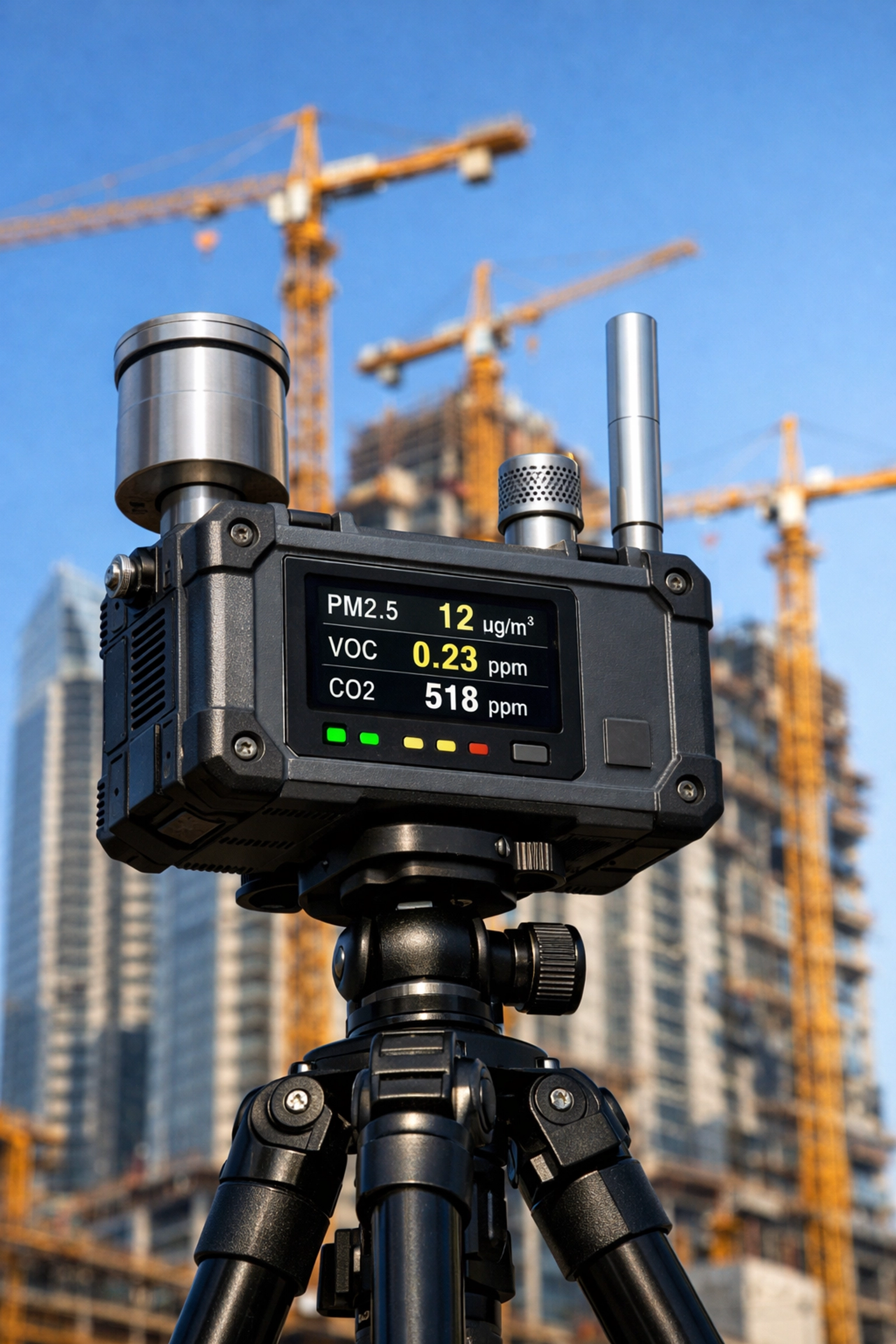
What a Typical Jobsite Assessment Covers
Every project is different, but the following checklist represents the core components of many industrial hygiene services engagements.
| Assessment area | What may be evaluated | Common methods or measurements |
|---|---|---|
| Airborne particulates | Total dust, respirable dust, and task-generated particulates | Personal air sampling, area sampling, real-time particle monitoring |
| Silica | Respirable crystalline silica from concrete, masonry, stone, or engineered materials | Personal breathing-zone sampling and laboratory analysis |
| Asbestos | Airborne asbestos fibers during building work or activities near suspect materials | Personal or area air sampling, PCM analysis, and project-specific fiber evaluation |
| VOCs | Solvents, coatings, adhesives, fuels, cleaning products, and off-gassing materials | Sorbent tubes, canisters, direct-reading instruments, or targeted laboratory methods |
| Noise | Equipment, demolition, fabrication, and construction-related sound exposure | Sound-level measurements and personal noise dosimetry |
| Heat stress | Environmental heat and workload-related conditions | Temperature, humidity, radiant heat, air movement, and work-rest evaluation |
| Ventilation | Air exchange, local exhaust, pressure relationships, and contaminant migration | HVAC review, airflow observations, carbon dioxide or other indicator measurements |
| Indoor air quality | Comfort complaints, odors, particulate levels, and potential contaminant sources | Direct-reading instruments, air samples, building walkthroughs, and occupant interviews |
| Construction dust | Dust generated by cutting, drilling, grinding, demolition, and earthwork | Real-time particulate monitoring and task-based silica or dust sampling |
The assessment may cover all of these areas or only one. For example, a concrete-cutting project may primarily require silica and construction dust monitoring, while a commercial building investigation may focus on ventilation, VOCs, particulates, and occupant complaints.
Exposure Monitoring: Personal and Area Sampling
Exposure monitoring is the measurement component of industrial hygiene services. It helps determine what workers are breathing or otherwise encountering during representative tasks.
Personal sampling places a sampling device in the worker’s breathing zone, generally near the collar or lapel. This approach is used when the question concerns an individual employee’s exposure over a work shift or during a particular task.
Area sampling evaluates conditions in a defined location. It may be used to characterize a work area, assess potential migration beyond a task zone, or document conditions near occupied spaces, property boundaries, or sensitive receptors.
Sampling plans should consider:
- Job classifications and similar exposure groups
- Work shifts and task duration
- Materials and equipment used
- Whether the work is performed indoors or outdoors
- Ventilation and weather conditions
- The number of workers potentially exposed
- Whether the work represents routine or worst-case conditions
A single sample is not always enough to characterize an exposure. Repeat sampling may be appropriate when work methods change, controls are modified, results approach an action level, or the project enters a new phase.
Air Sampling for Dust, Silica, VOCs, and Asbestos
Air sampling is selected according to the contaminant being evaluated. Different hazards require different collection media, flow rates, analytical methods, and reporting limits.
Particulates and construction dust
Construction dust can include particles from concrete, masonry, drywall, plaster, wood, soil, and other materials. Monitoring may measure total particulate matter, respirable particulate matter, or a specific constituent such as crystalline silica.
Real-time particle instruments can identify short-term spikes and help show how dust levels change as tasks begin, stop, or move. Laboratory-based filter samples provide analytical results for comparison with applicable exposure limits.
Respirable crystalline silica
Silica is a particular concern during cutting, drilling, grinding, crushing, or polishing of materials such as:
- Concrete
- Brick and block
- Mortar
- Stone
- Tile
- Engineered or artificial stone
- Certain mineral-based building products
Cal/OSHA’s construction silica requirements under Title 8 §1532.3 use an action level of 25 micrograms per cubic meter (µg/m³) and a permissible exposure limit of 50 µg/m³, each calculated as an 8-hour time-weighted average. The action level is a trigger for additional evaluation and monitoring; the PEL is the maximum permitted average exposure under the standard.
Vista can collect representative personal breathing-zone samples and coordinate laboratory analysis so project teams have data specific to their tasks and conditions.
VOCs
VOCs may be associated with paints, coatings, adhesives, sealants, fuels, solvents, cleaning products, and newly installed materials. Depending on the concern, industrial hygiene services may include short-term or full-shift sampling.
Results are typically compared with applicable OSHA PELs, Cal/OSHA requirements, NIOSH recommended exposure limits, or other recognized guidelines. The appropriate comparison depends on the specific compound, exposure duration, and project context.
Asbestos fibers
Asbestos sampling may be needed when construction, renovation, demolition, or maintenance activities could disturb suspect materials. Air monitoring can help evaluate airborne fiber concentrations during work or assess conditions in adjacent areas.
The sampling strategy depends on the building materials, work activities, regulatory requirements, and the project’s monitoring objectives. Vista’s broader environmental consulting services include asbestos and hazardous building-material surveys, air monitoring, and related testing support.
Noise Monitoring and Heat Stress Assessments
Industrial hygiene services are not limited to air contaminants.
Construction equipment, manufacturing machinery, demolition activities, and fabrication operations can create hazardous noise exposures. Under Cal/OSHA’s noise rules, the occupational noise PEL is generally 90 dBA as an 8-hour time-weighted average, while 85 dBA is commonly used as the hearing-conservation action level. A professional assessment may include sound-level measurements, personal dosimetry, task observations, and identification of high-noise operations.
Heat stress assessments address the interaction between environmental conditions and workload. Conditions that may be evaluated include:
- Air temperature and humidity
- Radiant heat from equipment or direct sun
- Air movement
- Clothing and required personal protective equipment
- Work intensity and task duration
- Availability of shade, water, and recovery periods
For outdoor construction in California, heat illness prevention requirements and site-specific conditions should be reviewed as part of the overall safety program. Monitoring can help document conditions and identify when work practices or scheduling require closer attention.
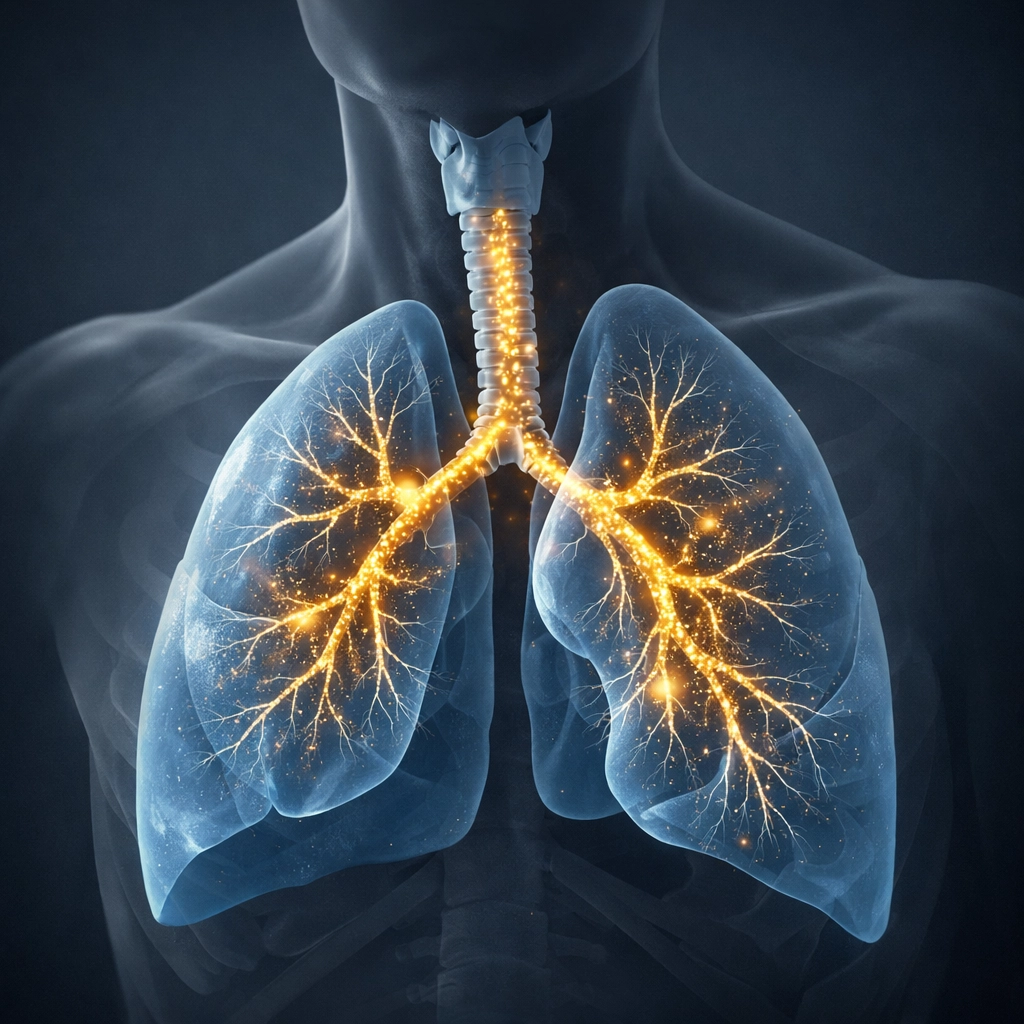
Ventilation and Indoor Air Quality Evaluation
Ventilation evaluation is often important when a workplace has odors, visible dust, elevated carbon dioxide, temperature complaints, or suspected contaminant migration.
An assessment may review:
- HVAC operating conditions
- Outdoor air supply
- Exhaust systems and local exhaust ventilation
- Airflow direction and pressure relationships
- Temporary construction ventilation
- Isolation between work areas and occupied spaces
- Potential pathways for dust, odors, or VOCs to migrate
Indoor air quality assessments may also include direct-reading measurements for temperature, relative humidity, carbon dioxide, particulate matter, and other indicators. These measurements do not automatically identify the source of a complaint. They provide data that can be interpreted alongside building history, occupant interviews, maintenance records, and visual observations.
Vista also provides IAQ sampling for projects such as LEED certification, as well as targeted evaluations for commercial, healthcare, education, and other occupied environments.
How 2026 California Compliance Updates Affect Dust Monitoring
California’s basic construction silica exposure limits remain 25 µg/m³ for the action level and 50 µg/m³ for the PEL, based on an 8-hour TWA. However, 2025–2026 regulatory developments increase the importance of careful exposure assessment and documentation.
The most significant updates have focused on general industry operations and high-exposure trigger tasks involving artificial or engineered stone. The permanent general-industry silica standard under Cal/OSHA Title 8 §5204 includes scheduled monitoring requirements for certain high-exposure tasks. California’s 2026 silica-related statutory changes also introduce additional training and annual attestation obligations for affected employers.
These updates do not replace the construction standard. They do mean that companies operating both construction sites and fixed fabrication or manufacturing facilities should confirm which requirements apply to each location and task.
For construction employers, practical priorities include:
- Identifying tasks that may reach or exceed the silica action level
- Using representative personal air monitoring where appropriate
- Documenting exposure-control decisions and monitoring results
- Repeating monitoring when exposure levels, tasks, materials, or controls change
- Coordinating industrial hygiene data with the written exposure control plan
- Reviewing whether separate general-industry requirements apply to fabrication or shop operations
The Cal/OSHA respiratory silica FAQ and California Department of Public Health’s workplace air-monitoring guidance are useful starting points. Requirements can be task- and site-specific, so a qualified professional should review the conditions before a monitoring plan is finalized.
Why Independent Sampling Matters
An independent consultant provides objective exposure data without being responsible for selling control equipment or performing remediation. That separation can be valuable when project owners, contractors, employees, or occupants need clear information about actual conditions.
Vista Environmental Consulting has provided environmental professional services since 2007. Our role is to investigate, sample, analyze, and report. We help clients understand what is present, where it is present, and when conditions may require additional action by the responsible parties or qualified contractors.
If you need industrial hygiene services for a construction project, manufacturing facility, or commercial building in California, contact Vista Environmental Consulting to discuss the site, the work activities, and the questions the assessment needs to answer.