
The management of airborne particulate matter, commonly referred to as construction dust, represents a critical intersection between engineering precision, public health, and regulatory compliance. In the context of modern infrastructure development, the presence of dust is not merely an aesthetic concern or a minor nuisance; it is a complex variable that directly influences the viability and success of a project. Systematic construction dust monitoring serves as the primary mechanism for quantifying these risks and implementing effective mitigation strategies.
Through the lens of professional environmental consulting services, the oversight of air quality on job sites has evolved from a secondary safety consideration into a foundational pillar of project management. This evolution is driven by an increased understanding of the physiological effects of fine particulates and a tightening of the legal frameworks governing workplace and community safety.
The Scientific Nature and Composition of Construction Dust
Construction dust is a heterogeneous mixture of solid particles suspended in the atmosphere. The composition varies significantly depending on the site activities and the materials being processed. Key components frequently documented in industrial environments include:
- Crystalline Silica: Naturally occurring in sand, stone, and concrete. When these materials are cut, ground, or drilled, they release Respirable Crystalline Silica (RCS), which is small enough to penetrate deep into the alveolar sacs of the lungs.
- Wood Dust: Generated through the processing of hard and softwoods, as well as manufactured boards like MDF or plywood. These fibers can contain various resins and chemical treatments.
- Mineral Dust: This category includes particulates from plaster, limestone, and gypsum, often found in drywall and interior finishing materials.
- Hazardous Particulates: Depending on the age of the structure, dust may also contain traces of heavy metals or historical insulation materials. Specialized assessments, such as those found in pre-demolition assessments, are required to identify these specific hazards.
The physical size of these particles is measured in micrometers (µm). Coarser dust, known as PM10, typically deposits in the upper respiratory tract, while finer dust, PM2.5, can enter the bloodstream. The objective of monitoring is to ensure that concentrations of these particulates remain below established exposure limits.

The Historical Evolution of Dust Regulation and Oversight
The systematic monitoring of construction dust is a relatively modern development in the history of civil engineering. During the early 20th century, industrial environments were largely unregulated, leading to widespread occupational illnesses. The establishment of the Occupational Safety and Health Administration (OSHA) in 1970 marked a significant shift toward standardized air quality oversight in the United States.
Since 2007, Vista Environmental Consulting has operated within this maturing regulatory landscape, providing technical expertise to bridge the gap between heavy construction and environmental safety. The firm's history reflects a broader industry transition from reactive measures: such as addressing complaints after they occur: to proactive monitoring and the integration of industrial hygiene services into the earliest phases of project planning.
This historical trajectory has seen the development of Permissible Exposure Limits (PELs) that are periodically reviewed and tightened. For example, the 2016 update to the OSHA Silica Standard significantly reduced the allowed exposure for construction workers, necessitating more precise and frequent monitoring technologies to ensure compliance.
Clinical Observations and Health Implications
The rationale for rigorous dust monitoring is rooted in documented clinical outcomes. Prolonged or high-intensity exposure to construction particulates is associated with a range of acute and chronic health conditions.
- Silicosis: A permanent scarring of the lungs caused by the inhalation of crystalline silica. It is progressive and irreversible, leading to severe respiratory impairment.
- Chronic Obstructive Pulmonary Disease (COPD): Exposure to various dust types can contribute to the development of chronic bronchitis and emphysema.
- Asthma and Sensitization: Wood dust and certain chemicals used in modern building materials can act as sensitizers, causing workers to develop allergic reactions and chronic asthma over time.
- Cardiovascular Effects: Research indicates that fine particulate matter (PM2.5) is linked to an increased risk of heart attacks and other cardiovascular events as these tiny particles migrate through the lungs into the circulatory system.
Beyond the long-term health risks, high dust levels pose immediate safety hazards. Airborne clouds reduce visibility for heavy equipment operators, increasing the likelihood of collisions and structural accidents. Monitoring ensures that these conditions are identified and remediated through water suppression or ventilation before they reach critical thresholds.

Technical Monitoring Methodologies and Data Acquisition
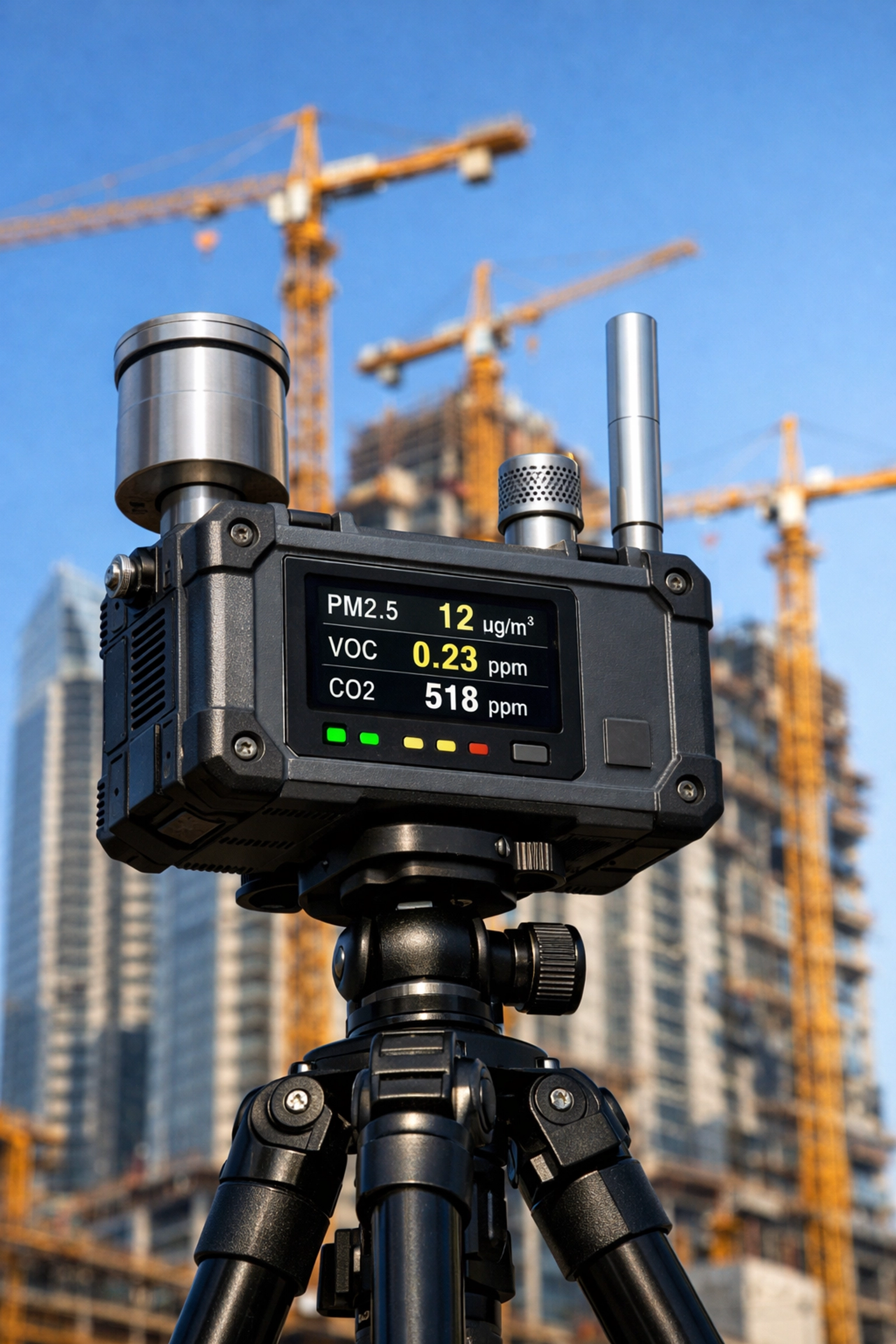
Modern dust monitoring utilizes advanced sensor technology to provide real-time data. Unlike older methods that relied on laboratory analysis of physical filters: often resulting in a multi-day delay: contemporary systems allow for immediate intervention.
The standard technical approach involves several key components:
- Optical Particle Counters (OPCs): These devices use laser diffraction or light scattering to count and size individual particles in the air stream.
- Telemetric Systems: Data is transmitted wirelessly to a central dashboard, allowing project managers and environmental consultants to view air quality levels from any location.
- Automated Alerts: Systems are programmed to send notifications via email or SMS if particulate levels exceed pre-defined "warning" or "action" levels.
- Meteorological Integration: Many monitoring stations include wind speed and direction sensors. This data is essential for determining whether dust is originating from the construction site or migrating from an external source.
By employing these technologies, Vista Environmental Consulting assists clients in maintaining a "defensible data set." This record proves that the site remained within safety parameters throughout the duration of the project, which is invaluable for hazardous materials investigations and general liability protection.
Regulatory Landscape and Financial Liability
The financial success of a construction project is inextricably linked to its compliance with local, state, and federal laws. Failure to implement adequate dust monitoring can lead to substantial economic penalties. Regulatory bodies such as OSHA and the Environmental Protection Agency (EPA) have the authority to issue "Stop Work" orders, which can cost contractors thousands of dollars in daily delays and lost productivity.
Furthermore, legal liabilities extend beyond government fines. If a project leads to documented health issues in the workforce or the surrounding community, the resulting litigation and compensation claims can jeopardize the financial stability of the contracting firm. Environmental consulting services provide the necessary oversight to mitigate these risks. By documenting that air quality was maintained according to the highest standards, firms protect themselves against unfounded claims of negligence.

Community Relations and Urban Development
As urban centers become more densely populated, construction activity increasingly occurs in close proximity to sensitive receptors, such as schools, hospitals, and residential neighborhoods. In these environments, dust monitoring is a vital tool for maintaining public trust and project continuity.
Air quality complaints from the community are one of the most common causes of project interruption. Without objective data, a contractor has no way to refute claims that their activities are causing a nuisance or a health hazard. Conversely, the presence of visible monitoring stations and the transparent sharing of data demonstrate a commitment to community welfare. For instance, projects involving hazardous materials surveys often require higher levels of transparency to alleviate public concern.
Strategic project management utilizes monitoring data to adjust work schedules. If wind conditions are unfavorable, or if monitoring indicates a spike in particulates, high-dust activities can be postponed or moved to a more sheltered area of the site. This level of operational agility is only possible through the continuous acquisition of environmental data.
Conclusion: The Synthesis of Monitoring and Project Success
The integration of construction dust monitoring into the lifecycle of a building project is a hallmark of professional excellence. It represents a transition from viewing environmental factors as obstacles to recognizing them as manageable variables. By prioritizing industrial hygiene services and the expertise of seasoned environmental consulting firms, project owners ensure that their developments are not only structurally sound but also ethically responsible and legally compliant.
Since 2007, the experience of Vista Environmental Consulting has shown that the most successful projects are those that anticipate environmental challenges rather than reacting to them. Through technical precision, historical awareness, and a clinical focus on safety, the monitoring of construction dust ensures that the progress of the built environment does not come at the expense of human health or project integrity.
For further information on specific project types and environmental standards, professionals may consult the markets overview or explore specialized resources regarding asbestos and other hazardous materials.
