
The Historical Context of Lead Utilization and Regulation
The use of lead (Plumbum) in human civilization dates back to approximately 6500 BCE. Its naturally occurring properties, such as high density, low melting point, and extreme malleability, made it a preferred material for ancient Roman plumbing and architectural components. By the 19th and early 20th centuries, the industrial application of lead reached its zenith within the United States. Lead was integrated into interior and exterior paints as "white lead" (lead carbonate) to increase durability, speed up drying times, and resist moisture.
Despite its desirable physical properties, the toxicological effects of lead were documented as early as the first century BCE by the Roman architect Vitruvius, who noted the pallor of workers in lead smithies. In the United States, the recognition of lead-based paint as a significant public health hazard led to the Lead-Based Paint Poisoning Prevention Act of 1971. This legislative momentum culminated in the 1978 ban by the Consumer Product Safety Commission (CPSC) on the sale of lead-based paint for residential use. However, the legacy of this material remains a central concern for Environmental Consulting / Services due to its continued presence in millions of structures built prior to the ban.

1. The Utilization of Uncertified Personnel for Inspections
A common procedural error in property management and construction involves the assumption that general contractors or unlicensed individuals possess the authority to conduct lead-based paint inspections. Under Environmental Protection Agency (EPA) regulations, a distinction is maintained between a "renovator" and an "inspector."
The EPA mandates that only a certified lead-based paint inspector or a certified risk assessor is authorized to perform a comprehensive inspection and generate an official report. While certified renovators are permitted to perform basic lead-based paint determinations using recognized test kits for specific renovation projects, they lack the legal standing to certify a building as "lead-free." The failure to employ properly credentialed professionals often results in invalid data that cannot be utilized for regulatory compliance or real estate transactions. This is particularly critical in specialized environments such as the department of motor vehicles hazardous materials projects, where strict adherence to state and federal oversight is required.
2. Reliance on Retail-Grade Chemical Test Kits
The retail market provides various over-the-counter lead test kits marketed to homeowners and contractors. However, the EPA maintains stringent limitations on their use. Currently, only three chemical test kits are recognized by the EPA, and their application is restricted to certified renovators conducting determinations for the Renovation, Repair, and Painting (RRP) Rule.
For a definitive Lead-Based Paint Inspection, professionals utilize more sophisticated and precise methodologies:
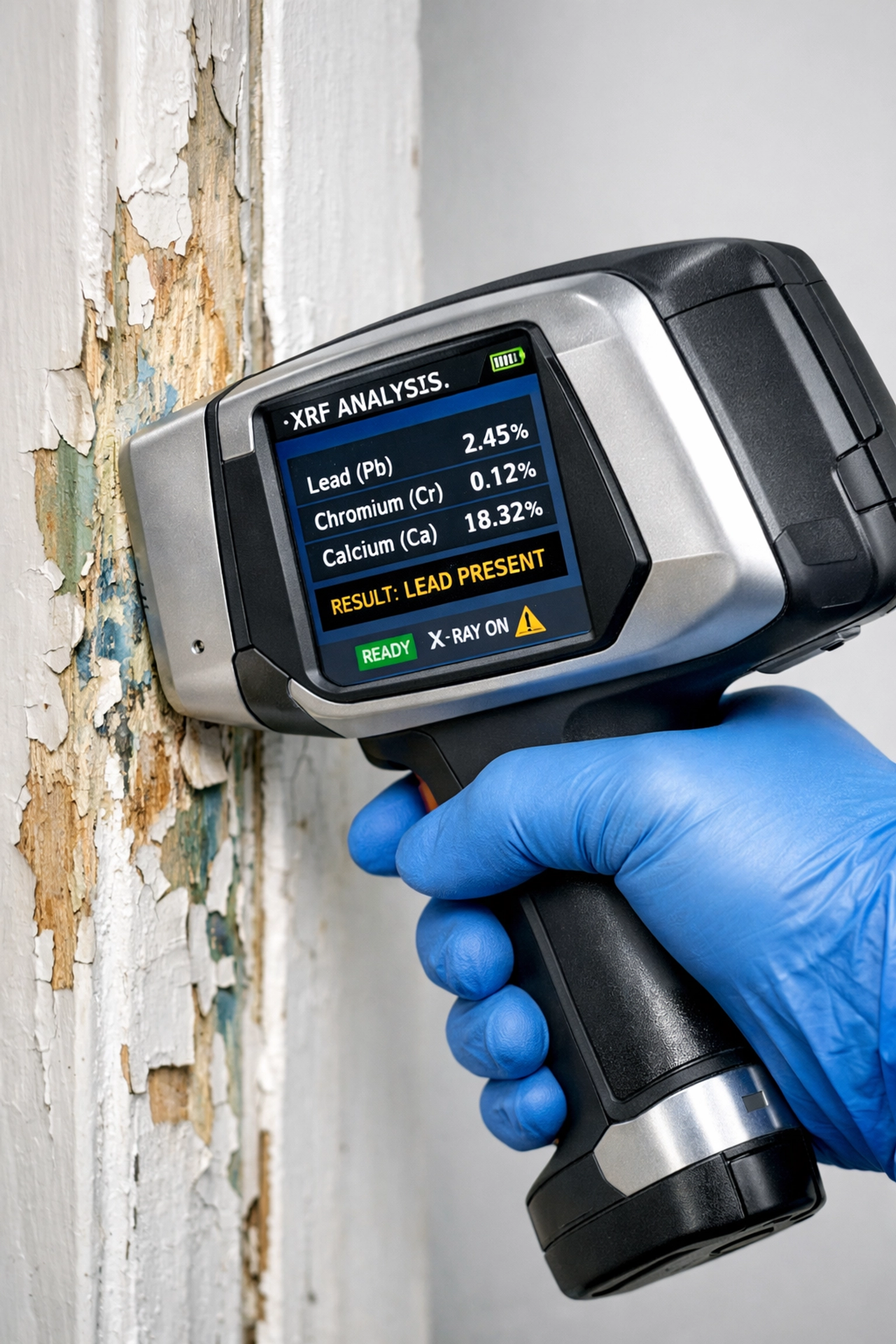
- Portable X-Ray Fluorescence (XRF) Analyzers: These devices emit high-energy photons that displace electrons from the inner shells of lead atoms. The resulting fluorescence is measured to determine the concentration of lead in milligrams per square centimeter (mg/cm²).
- Laboratory Paint Chip Analysis: This involves the physical removal of a paint sample, which is then digested in acid and analyzed via Inductively Coupled Plasma (ICP) spectroscopy or Atomic Absorption (AA) spectrometry.
Retail kits are prone to false negatives, especially on certain substrates like plaster or wood with high tannin content, and they cannot provide the quantitative data necessary for a formal Risk Assessment.
3. Non-Adherence to Lead-Safe Work Practices (RRP)
The commencement of renovation, repair, or painting activities in pre-1978 structures without implementing lead-safe practices is a frequent violation of the EPA’s RRP Rule. This rule applies to any activity that disturbs more than six square feet of interior lead-based paint or twenty square feet of exterior lead-based paint.
Required lead-safe practices include:
- Containment: Utilizing heavy-duty plastic sheeting to prevent the migration of dust and debris.
- Prohibited Methods: The exclusion of high-heat guns, power sanding without HEPA attachments, and open-flame burning.
- Cleaning Verification: A systematic process to ensure no lead-contaminated dust remains on surfaces following the completion of work.
Neglecting these protocols can lead to significant environmental contamination, mirroring the complexities found in larger-scale operations like the Port of Oakland pre-demolition assessment.
4. Obsolescence of Hazard Threshold Knowledge (2025 Update)
A critical shift in the regulatory landscape occurred on January 13, 2025. The EPA introduced significant revisions to the Dust-Lead Hazard Standards (DLHS), replacing them with lower Dust-Lead Reportable Levels (DLRL).
Historically, the thresholds for lead dust were set at 10 µg/ft² for floors and 100 µg/ft² for interior window sills. Under the new directive, the standard for floors and window sills is now defined as any reportable level of lead. This transition reflects a clinical consensus that there is no safe level of lead exposure, particularly for pediatric populations. Property owners and managers must ensure that their compliance strategies are updated to meet these zero-threshold reportable levels by the final implementation deadline of January 12, 2026. This change affects all sectors, from residential housing to institutional facilities like the Oakland Unified School District hazardous waste management programs.

5. Improper Surface Area Calculation in Dust Sampling
The efficacy of lead dust sampling is contingent upon the technical accuracy of the sampling area. A common technical mistake involves using dust wipes over an inadequate surface area, which can skew the laboratory results and fail to reach the necessary detection limits required by the 2025 EPA rules.
To comply with the new, lower reporting limits, the following technical specifications are recommended for lead professionals:
- Floor Sampling: A minimum area of two square feet should be wiped to ensure a representative sample.
- Window Sills: A minimum area of 36 square inches (0.25 square feet) is required.
Using smaller areas reduces the total mass of dust collected, potentially resulting in "non-detect" findings that do not accurately reflect the actual risk present on the surface. Accuracy in these measurements is as vital as the technical rigor applied in asbestos surveys.
6. Deficiencies in Record Retention and Chain of Custody
The EPA’s Real Estate Disclosure regulation mandates that all records pertaining to lead-based paint testing, paint chip sampling, and lead-free determinations must be maintained as official documents. A frequent mistake is the misplacement or informal storage of these reports.
Official documentation must include:
- The date of the inspection.
- The specific locations and components tested.
- The methodology employed (e.g., XRF serial numbers and calibration logs).
- Laboratory results with a documented chain of custody.
In the event of an EPA audit or a legal dispute, the absence of these records can lead to severe financial penalties. Detailed record-keeping is a cornerstone of professional environmental management, similar to the protocols seen in the naval base Ventura hazardous materials investigation.

7. Failure to Execute Mandatory Disclosure Protocols
The Residential Lead-Based Paint Hazard Reduction Act of 1992, specifically Section 1018, requires the disclosure of known information on lead-based paint and lead-based paint hazards before the sale or lease of most housing built before 1978.
The disclosure process involves several non-negotiable steps:
- Lead Warning Statement: Sellers and landlords must include a specific, federally mandated warning statement in the contract.
- EPA Pamphlet: Distribution of the "Protect Your Family From Lead in Your Home" pamphlet is mandatory.
- 10-Day Opportunity: Buyers must be granted a 10-day period to conduct a certified inspection or risk assessment at their own expense before becoming obligated under a purchase contract.
Failure to provide these disclosures is not merely a procedural oversight but a violation of federal law, which can result in civil fines and triple damages in private litigation.
Clinical Realities of Lead Exposure
Lead is a potent neurotoxin that accumulates in the skeletal system and soft tissues. Chronic exposure, even at low levels, is associated with a spectrum of adverse health outcomes. In pediatric populations, lead exposure is linked to cognitive impairment, behavioral disorders, and delayed physical development. In adults, documented effects include hypertension, renal dysfunction, and reproductive complications.
The necessity of rigorous lead-based paint inspections is rooted in these clinical realities. Whether managing a seismic retrofit at the Corona Regional Medical Center or overseeing a school district renovation, the objective remains the systematic identification and mitigation of lead hazards to protect public health and ensure regulatory compliance. The evolution of EPA standards underscores a global shift toward more stringent environmental health protections, necessitating a higher level of technical expertise and diligence from property stakeholders.

For further information on environmental compliance and the management of hazardous materials, professionals may consult the Vista Environmental Consulting blog for ongoing updates on industry standards and regulatory changes.
