
When you discover a suspicious substance during a renovation or a routine inspection, the clock starts ticking. Whether it’s a chalky pipe wrap in an old basement or peeling paint in a pre-1978 facility, the "unknown" is the enemy of…

When you discover a suspicious substance during a renovation or a routine inspection, the clock starts ticking. Whether it’s a chalky pipe wrap in an old basement or peeling paint in a pre-1978 facility, the "unknown" is the enemy of…

The management of hazardous materials within educational facilities is a cornerstone of modern institutional governance. Among these materials, asbestos remains one of the most significant due to its historical prevalence and documented health implications. For school administrators, navigating the regulatory…

The management of hazardous materials within educational facilities is a cornerstone of modern institutional governance. Among these materials, asbestos remains one of the most significant due to its historical prevalence and documented health implications. For school administrators, navigating the regulatory…

The management of particulate matter within the construction industry has evolved from a secondary cleanliness concern into a primary operational and financial risk factor. As urban renewal projects increase in density and regulatory frameworks tighten, the ability to monitor air…
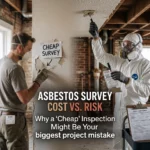
The implementation of construction, renovation, or demolition projects involves a significant "unknown factor." For property owners, school administrators, and developers, the presence of hazardous materials: specifically asbestos: represents one of the most substantial variables impacting project timelines, budgets, and legal…
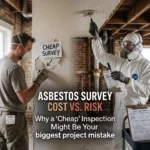
The implementation of construction, renovation, or demolition projects involves a significant "unknown factor." For property owners, school administrators, and developers, the presence of hazardous materials: specifically asbestos: represents one of the most substantial variables impacting project timelines, budgets, and legal…

The integration of asbestos into the infrastructure of American educational institutions represents one of the most complex legacies of twentieth-century construction. Once hailed for its exceptional thermal insulation, high tensile strength, and fire-resistant properties, asbestos-containing materials (ACM) were ubiquitous in…

The regulatory landscape regarding lead exposure in the California construction industry has undergone a radical transformation. As of May 2026, the stringent standards implemented by the California Division of Occupational Safety and Health (Cal/OSHA) have moved from a transitional phase…
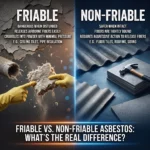
Asbestos is a term used to describe a group of six naturally occurring silicate minerals that share a common fibrous morphology. For centuries, these minerals were prized for their exceptional physical properties, including high tensile strength, chemical resistance, and extraordinary…
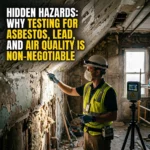
The history of the built environment is a narrative of human innovation shadowed by unforeseen biological and chemical consequences. From the earliest civilizations to the rapid industrialization of the 20th century, the materials chosen for their durability, fire resistance, and…
