
The landscape of environmental compliance underwent a significant transformation as of January 2026. For property owners, facility managers, and developers, the standards for a successful lead based paint inspection have become more rigorous than at any point in the last half-century. The Environmental Protection Agency (EPA) has finalized and implemented stricter dust-lead hazard standards (DLHS) and dust-lead clearance levels (DLCL), effectively lowering the threshold for what constitutes a safe environment.
Since the initial ban on lead-based paint in residential applications in 1978, regulatory bodies have systematically reduced the permissible levels of lead in dust. This trajectory is driven by medical consensus that no level of lead exposure is considered safe for human neurological development. As these standards tighten, many properties that previously passed inspections are now finding themselves in a state of non-compliance. Understanding these changes is critical for maintaining the safety and legality of multi-family housing, schools, and commercial redevelopment projects.
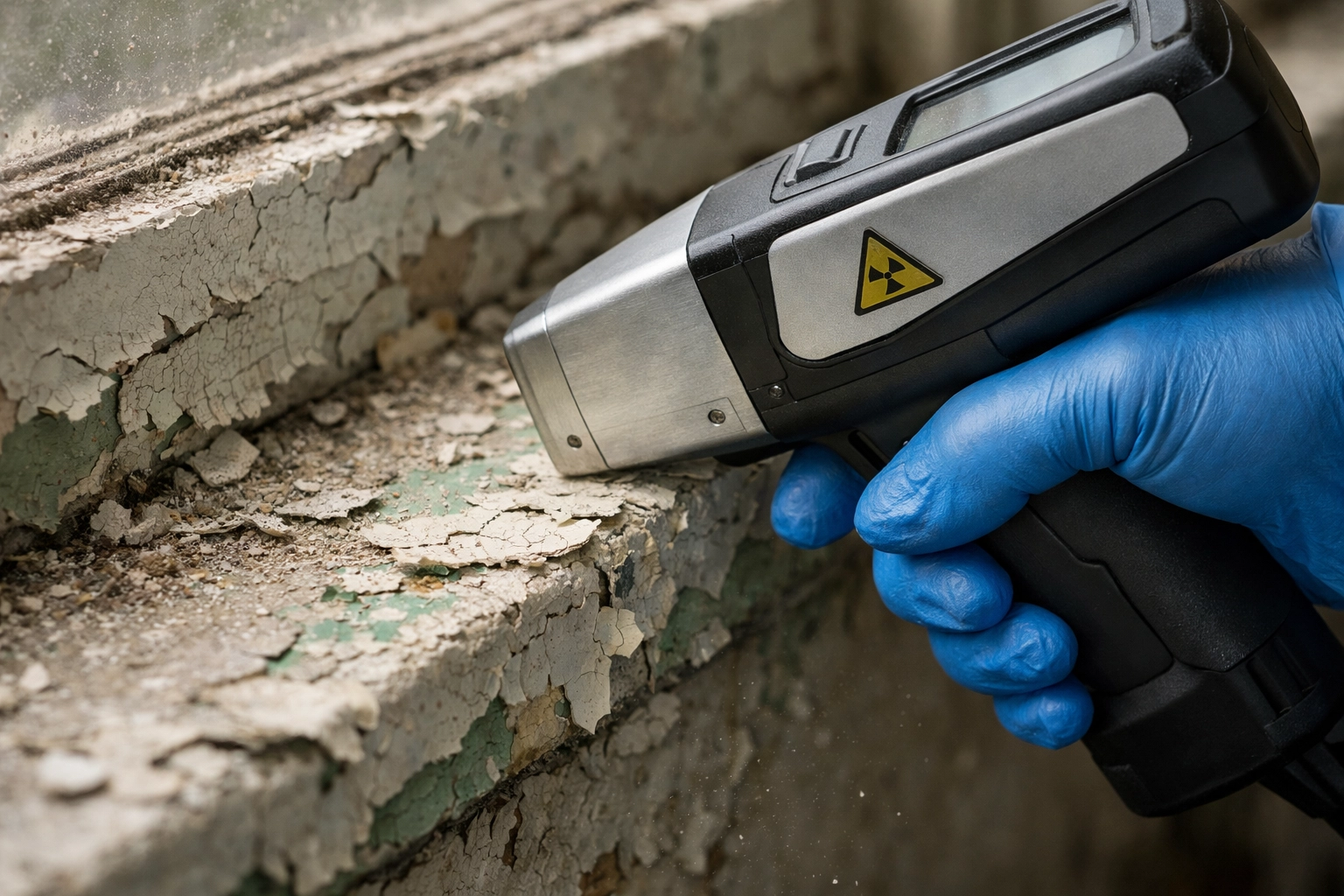
1. The Significant Reduction in Dust-Lead Action Levels
The most direct reason a contemporary lead based paint inspection may result in failure is the dramatic reduction in the "action levels" for lead dust. As of the 2026 compliance deadline, the EPA has established post-abatement clearance levels that are significantly lower than those used in previous decades.
The specific thresholds now required for clearance are:
- Floors: 5 micrograms per square foot (µg/ft²), reduced from the previous standard of 10 µg/ft².
- Interior Window Sills: 40 µg/ft², reduced from the previous standard of 100 µg/ft².
- Window Troughs: 100 µg/ft², a substantial drop from the historical 400 µg/ft² standard.
These changes mean that the "cleaning to clearance" process requires a much higher degree of precision. Surfaces that appear visually clean can still harbor microscopic dust particles that exceed the 5 µg/ft² limit on floors. In the context of redevelopment or urban renewal, this requires more specialized cleaning protocols and rigorous verification from environmental consulting services.
2. The New "Reportable Level" Hazard Definition
Perhaps the most significant shift in the 2026 rules is the redefinition of what constitutes a "hazard." Previously, a hazard was identified only when dust-lead levels exceeded a specific numeric threshold. Under the current regulations, the EPA has moved toward a more sensitive model.
The EPA now defines a lead dust hazard as any reportable level of lead dust measured by an EPA-recognized laboratory. This means that if a laboratory’s equipment is sensitive enough to detect lead dust at levels even lower than the action levels, that detection may be classified as a hazard in a pre-abatement environment. This "any detectable level" philosophy removes the safety margin that property owners previously relied upon. If the lab can find it, the inspection may technically fail to classify the area as "lead-free" or "lead-safe," necessitating further action or disclosure.

3. Decoupling of Standards: Hazard Identification vs. Clearance
Historically, the level used to identify a hazard was the same level used to clear a project after abatement. The 2026 rules have "decoupled" these standards. This creates a two-tiered system that can be confusing for those not utilizing professional environmental consultants in San Diego or other highly regulated regions.
The distinction is as follows:
- Dust-Lead Reportable Level: This is used for identifying hazards in existing conditions. Because this is now tied to the lowest level a laboratory can reliably detect, the barrier for identifying a hazard is lower than ever.
- Dust-Lead Action Level: This is the standard used to determine if an abatement or renovation project was successful.
This decoupling means a property could potentially fail an initial screening (hazard identification) because lead was detected at 3 µg/ft² on a floor, even though that same level would be considered "clean" if it were measured during a post-abatement clearance test (where the limit is 5 µg/ft²). This regulatory nuance requires sophisticated documentation and expert interpretation to navigate without unnecessary project delays.
4. Stricter Requirements for Pre-1978 and Child-Occupied Facilities
The 2026 rules place an increased emphasis on K-12 education facilities and healthcare environments. For any structure built before 1978 that houses children under the age of six, the tolerance for lead dust is essentially zero.
The EPA's updated research indicates that even low-level exposure contributes to cognitive impairment and behavioral issues. Consequently, the inspection process for these facilities now includes more frequent sampling and a lower threshold for initiating abatement. For managers of higher education student housing or civic buildings, these rules apply whenever the space is utilized by the protected age group. Failure to meet these standards doesn't just result in a failed inspection; it can lead to significant legal liabilities and federal enforcement actions.

5. Laboratory Sensitivity and Sampling Precision
Under the new standards, the choice of laboratory and the method of sampling have become critical variables. Because the "reportable level" is now the benchmark for hazard identification, the sensitivity of the laboratory's analytical methods directly impacts whether a property passes or fails.
Standard wipe sampling techniques must be executed with extreme precision to avoid cross-contamination. Even a minor oversight in the sampling field: such as using a wipe that has not been properly validated for the new lower thresholds: can result in an artificially high reading that triggers a failure. Environmental consulting services must now ensure that their chain of custody and laboratory partners are capable of detecting lead at the 2026 parts-per-billion requirements.
Professional Compliance and Risk Mitigation
Navigating the complexities of the 2026 EPA dust rules requires a partner with deep technical expertise and a proven safety record. Vista Environmental Consulting has been providing comprehensive environmental consulting services since 2007, assisting clients through several iterations of lead and asbestos regulatory changes.
In an era where the margin for error has been reduced to nearly zero, the credentials of your consultant are a primary defense against project failure and liability. Vista Environmental Consulting maintains the highest industry standards, evidenced by:
- ISNetworld 'A' Rating: Ensuring the highest level of safety and quality management.
- Experience Modification Rate (EMR) of .83: Reflecting a superior safety record compared to the industry average.
- Member Number 400-222568: Verifiable standing within professional compliance networks.

For those managing assets in Southern California, including San Diego County and Orange County, or in the Northern California region around the San Francisco Bay Area, the localized enforcement of these federal rules can vary. Engaging with experienced environmental consultants in San Diego ensures that local regional requirements are met alongside the federal 2026 standards.
Conclusion
The 2026 EPA dust rules represent a permanent shift in how lead-based paint hazards are managed in the United States. The reduction of action levels to 5/40/100 µg/ft², combined with the "any detectable level" hazard definition, means that property owners must be more proactive than ever. A failed inspection is no longer just a hurdle; it is a signal that the legacy of lead-based paint requires modern, precision-based solutions.
By understanding the decoupling of standards and the increased sensitivity of modern laboratory testing, stakeholders can better prepare their properties for the rigorous federal oversight currently in place. Ensuring compliance is not merely a matter of passing a test: it is about the clinical necessity of eliminating lead exposure in the built environment. For those seeking to verify their compliance or schedule an updated lead based paint inspection, professional contact with a qualified consultant is the first step in mitigating risk and ensuring the safety of all building occupants.
